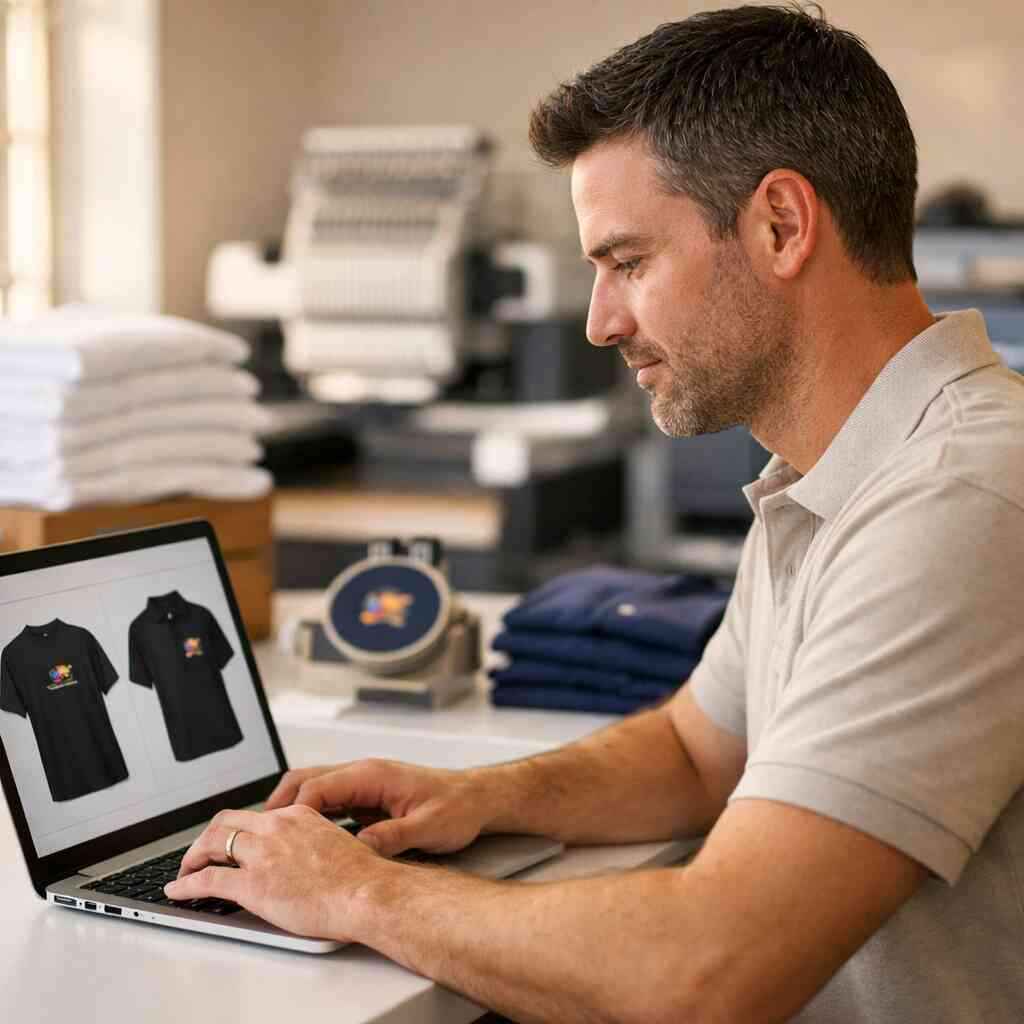
How to Compare DTG Printing and Embroidery for Brands
DTG printing is usually the better choice for full-color, detailed artwork on soft cotton apparel, while embroidery is stronger for polished, long-lasting branding on polos, hats, and workwear. If your design needs photo-like detail, go with DTG. If you want a more premium, structured look that holds up on the shelf and in the field, embroidery usually wins.
Key Takeaways
- DTG printing works best for detailed, colorful art on cotton or cotton-blend custom tees, especially when you want a smooth hand feel.
- Embroidery is usually better for company apparel, custom polo shirts, custom hats, and branded merchandise that should look sharp and professional.
- The right choice depends on artwork complexity, fabric, order quantity, audience, and durability needs.
- For logos, vector art conversion helps embroidery stay clean, while DTG performs best with high-resolution artwork and the right garment prep.
- If you need help deciding, a local custom apparel company in Commack can compare samples and guide you before you order custom shirts online.
When DTG looks perfect on the mockup but embroidery still wins on the shelf
DTG can make a mockup look incredibly close to the final shirt, especially for photo-heavy custom tees and detailed logo shirt design. But embroidery often wins when the goal is a premium feel, stronger visual texture, and a garment that looks intentional from across the room. If you are trying to decide between the two, start with how the piece will be worn, washed, and seen.
Why brands in Commack and across Long Island choose direct to garment printing for photo-heavy custom tees and when that choice falls short
DTG printing is a smart fit for custom shirt printing in Commack when your design has gradients, tiny text, or full-color artwork. It uses ink applied directly to the fabric, which makes it ideal for custom tees, custom baby onesies, custom printed masks, and lightweight event merchandise. On cotton shirts, the result can feel soft and look almost like the artwork was part of the fabric.
Here is the part most people miss: DTG is not the best answer for every garment. It usually performs best on cotton, and it is less ideal for very textured fabric, some dark synthetics, and jobs that need a raised, premium finish. For readers comparing direct to garment printing options, the real question is not “Does it print well?” It is “Will this still look right after the shirt has been worn, folded, and washed?”
On projects like school spirit wear, family reunion shirts, and personalized t-shirts, DTG often solves the design problem quickly. A client in Suffolk County once came in with a complex event graphic full of shaded faces, type, and a small sponsor line. Embroidery would have simplified the art too much. DTG kept the detail intact and made the mockup match the final result closely.
Where custom embroidery changes the game for company apparel, custom polo shirts, custom hats, and branded merchandise that needs a premium feel
Embroidery changes the conversation when the apparel itself needs to project authority. It works especially well on business shirts, custom polo shirts, custom hats, custom hoodies, custom sweatshirts, and custom workwear because the stitched texture feels permanent and professional. That is why many brands choose embroidery services for company apparel, branded merchandise, and corporate gifts.
Embroidery also holds up visually on items people handle often, like custom embroidered caps or front-chest logos on polos. For heavier garments, the stitching can feel more natural than ink. It is also a strong fit for uniforms, custom police shirts, custom fire department shirts, custom construction shirts, and custom apparel for churches where a clean, authoritative presentation matters.
A small local contractor once wanted shirts for supervisors and hats for the field crew. The shirt art was simple, but the audience was not. We steered the polos and caps toward embroidery because the stitched logo looked more credible on-site, while the handout tees stayed in print. That mix is often the right answer.
The decision matrix that separates printed detail from stitched authority
The best choice between DTG printing vs embroidery depends on more than the logo. Fabric, garment type, quantity, color matching, and artwork setup all change the answer. If you compare them carefully, you avoid paying for a method that fights your design instead of supporting it.
How artwork, fabric, and quantity change the answer between DTG printing vs embroidery for custom shirt printing in Commack
The simplest rule is this: if the design is detailed and flat, lean DTG; if it is simple and needs texture, lean embroidery. Small runs often favor DTG because there is no screen setup, and it can be efficient for no minimum custom shirts or a quick rush order t-shirts request. Larger runs may shift depending on garment type and how many identical placements you need. 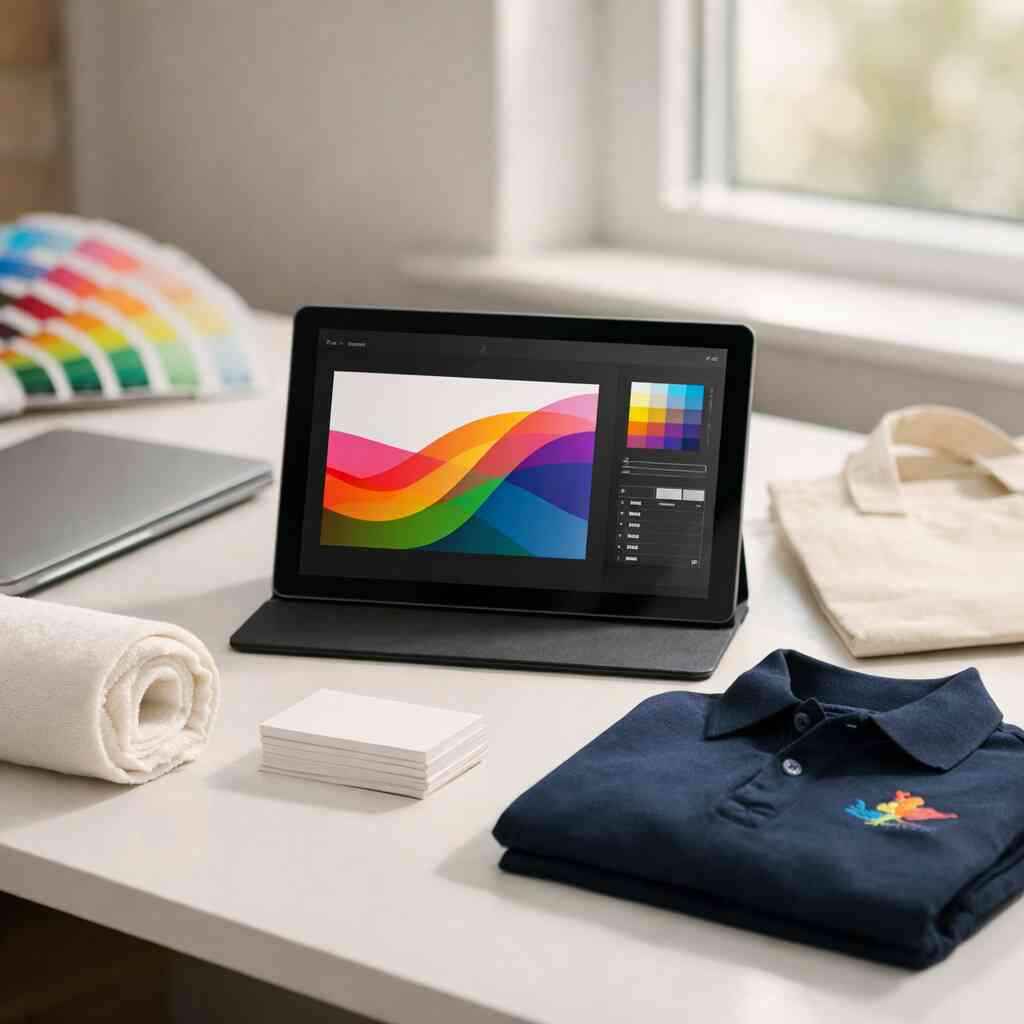
FactorDTG printingEmbroideryBest forPhotos, gradients, tiny type, detailed graphicsLogos, names, polos, hats, workwearBest fabricsCotton, many cotton blendsMost durable on structured garmentsFeelSoft and low profileRaised, textured, premiumSetup needsFile prep and pretreatmentVector art conversion and logo digitizingBest use casesCustom tees, onesies, event shirtsCompany apparel, hats, uniformsFor brands in Long Island custom shirt printing, the practical answer often comes from the garment itself. A thin fashion tee may be perfect for DTG. A structured polo from Jerzees or a cap for branded giveaways may be better with embroidery. If you need a side-by-side breakdown, How to Choose Screen Printing for Bulk Event Shirts is a useful reference, even if your final choice is embroidery.
What to consider about durability, color matching, water-based ink, embroidery thread colors, and the real limits of logo shirt design
Durability matters because branded apparel has to survive real use. DTG can produce strong results when the garment is pretreated correctly and the print is cured properly. Quality control should also include wash testing and crocking awareness; many print shops look at performance through industry methods such as ASTM D5264 for abrasion resistance and AATCC crocking checks for color transfer. Embroidery, meanwhile, brings thread-based durability, but the final look depends on stitch count, stabilizer, and placement.
Color matching is another major difference. DTG uses ink mixes that can reproduce a wide range of colors, but exact Pantone matching is not always as precise on fabric as it is on coated paper. Embroidery uses thread colors, which are selected from a set palette. If the logo needs a specific brand color, the production team may need to adjust expectations or use digitizing techniques to preserve the right contrast. That is where screen printing services and DTG can sometimes outperform embroidery for exact color branding.
The real limits show up in the logo itself. Fine serif type, tiny legal copy, and hairline shapes may be too small for stitching. In those cases, embroidery digitizing simplifies the art so it can sew cleanly. Strong embroidery usually starts with good vector art conversion and the right stitch planning, including flat embroidery for clean logos or 3D puff embroidery for select caps. For one of the clearest internal comparisons, see Embroidery Vs Dtg Comparison By Custom Shirt Printings.
Which path should your brand take when the deadline, budget, and audience all matter
The right choice is the one that fits your deadline, your budget, and the people wearing the apparel. DTG is often the most flexible for artwork-heavy jobs and small-to-medium runs. Embroidery is usually the safer move for apparel that needs structure, durability, and a more polished presentation. If you need help fast, upload artwork and ask for free design help before you commit.
When to order custom shirts online with free design help, vector art conversion, and upload artwork for fast turnaround printing
If you already have artwork, upload it early and ask the shop to review the file format. That saves time and avoids surprises. For DTG, a high-resolution PNG or layered file usually helps. For embroidery, vector art conversion and logo digitizing are often needed so the stitch file is clean and scalable.
A simple order flow usually looks like this:
- Choose the garment.
- Upload artwork or use the online t-shirt designer.
- Confirm placement, size, and decoration method.
- Review the mockup.
- Approve production.
For brands comparing cost and timing, this is where honest guidance matters. A shop with on-site equipment can often reduce shipping delays because the work stays local instead of bouncing to a third-party fulfiller. If you are trying to keep production close to home, Direct to Garment (DTG) Services are a strong option for detailed apparel, especially for custom DTG Long Island orders that need a local touch. For exact pricing questions, it is better to ask for a quote than guess.
That is especially true for businesses, schools, churches, and event planners in Commack, Long Island, and across Suffolk County. A local printer at 1139-7 Jericho Tpk. in Commack can usually help you compare custom t-shirt options, custom hoodies, custom tote bags, custom aprons, and event shirts in one conversation. If you want to see pickup and service details, check the Commack shop page and call for a quote.
For readers who want a broader comparison between decoration methods, the clearest next read is How to Compare DTG Printing and Embroidery for Brands. And if your brand needs a straightforward answer on whether to use print or stitch, our custom printing services can help narrow it down before you place the order.
If you need custom shirts, company apparel, or promotional apparel with a real person helping you choose the right method, Custom Shirt Printings in Commack is a solid place to start. Call +1 833-744-7811 for a quote, and bring your artwork or logo so the team can help you decide whether DTG, embroidery, screen printing, or another decoration method fits your job best.
Frequently Asked Questions
Question: How do I decide between DTG printing vs embroidery for my custom shirt printing project?
Answer: The best choice usually comes down to the artwork, garment, and the look you want for your custom apparel. DTG printing is a strong fit for detailed, full-color designs, photo-style graphics, and personalized t-shirts on cotton or cotton-blend garments. Embroidery is usually better for company apparel, business shirts, custom polo shirts, custom hats, and custom workwear when you want a polished, textured, long-lasting finish. At Custom Shirt Printings in Commack, we can help you compare both methods, review your logo shirt design, and recommend the best option for your custom shirt printing in Commack or anywhere on Long Island. If you already have artwork, upload artwork for a mockup and we can guide you from there.
Question: In How to Compare DTG Printing and Embroidery for Brands, which option is better for custom tees, custom hoodies, and event merchandise?
Answer: For custom tees and event merchandise with detailed artwork, DTG printing often gives the best result because it handles gradients, fine lines, and complex color work very well. It is also a great choice for custom hoodies, custom long sleeve shirts, custom v-neck tees, and other apparel where you want a soft print feel. Embroidery can still be the better pick for structured items like custom polo shirts, custom hats, and custom embroidered caps when the goal is a premium branded look. If you are unsure, our team can help with free design help, compare your t-shirt mockup and printing options, and suggest the right apparel decoration method for your order custom shirts online request.
Question: Can Custom Shirt Printings help with logo digitizing and vector art conversion for embroidery?
Answer: Yes, embroidery works best when your logo is prepared properly, and that is where logo digitizing and vector art conversion matter. Clean vector artwork helps the stitching stay sharp and readable, especially on flat embroidery and select 3D puff embroidery projects. If your logo is not ready for embroidery, we can help review the file and suggest what adjustments may be needed so your branding looks clean on company apparel, promotional apparel, or custom workwear. This is especially helpful for businesses ordering custom shirt printing near me, custom apparel for businesses, or branded merchandise that needs a professional finish. If embroidery is not the best fit, we can also suggest DTG printing, screen printing, or another method that better supports the artwork.
Question: Is DTG printing a good choice for custom baby onesies, custom printed masks, and no minimum custom shirts?
Answer: Yes, DTG printing is often a great choice for smaller orders, no minimum custom shirts, and products like custom baby onesies or custom printed masks when the design is detailed and colorful. It is especially useful for one-off orders, family reunion shirts, school spirit wear, and rush order t-shirts where flexibility matters. Because DTG is ideal for direct to garment projects on suitable fabrics, it can be a smart option for custom shirt design online when you want high-quality custom shirts without committing to a large quantity. At Custom Shirt Printings, we can help you compare custom t-shirt options, review your artwork, and choose the best decoration method for your budget, audience, and deadline.
Question: Why should brands in Commack choose Custom Shirt Printings for custom apparel and branded merchandise?
Answer: Custom Shirt Printings is a great local option because we offer multiple decoration methods, including screen printing, DTG printing, embroidery, heat transfer, and direct-to-film, so you can choose the method that fits your apparel and design goals. Whether you need custom hoodies, custom tote bags, custom aprons, custom sports jerseys, custom construction shirts, custom police shirts, custom fire department shirts, or promotional giveaways, we can help you create your own shirt with the right decoration approach. Being a custom apparel company in Commack makes it easier to get local support, compare samples, and move quickly on order custom shirts online requests. If you are looking for custom shirt printing in Commack, Long Island custom embroidery, or custom DTG Long Island services, our team can help you find the right solution for your project and keep the process simple from upload artwork to final approval.