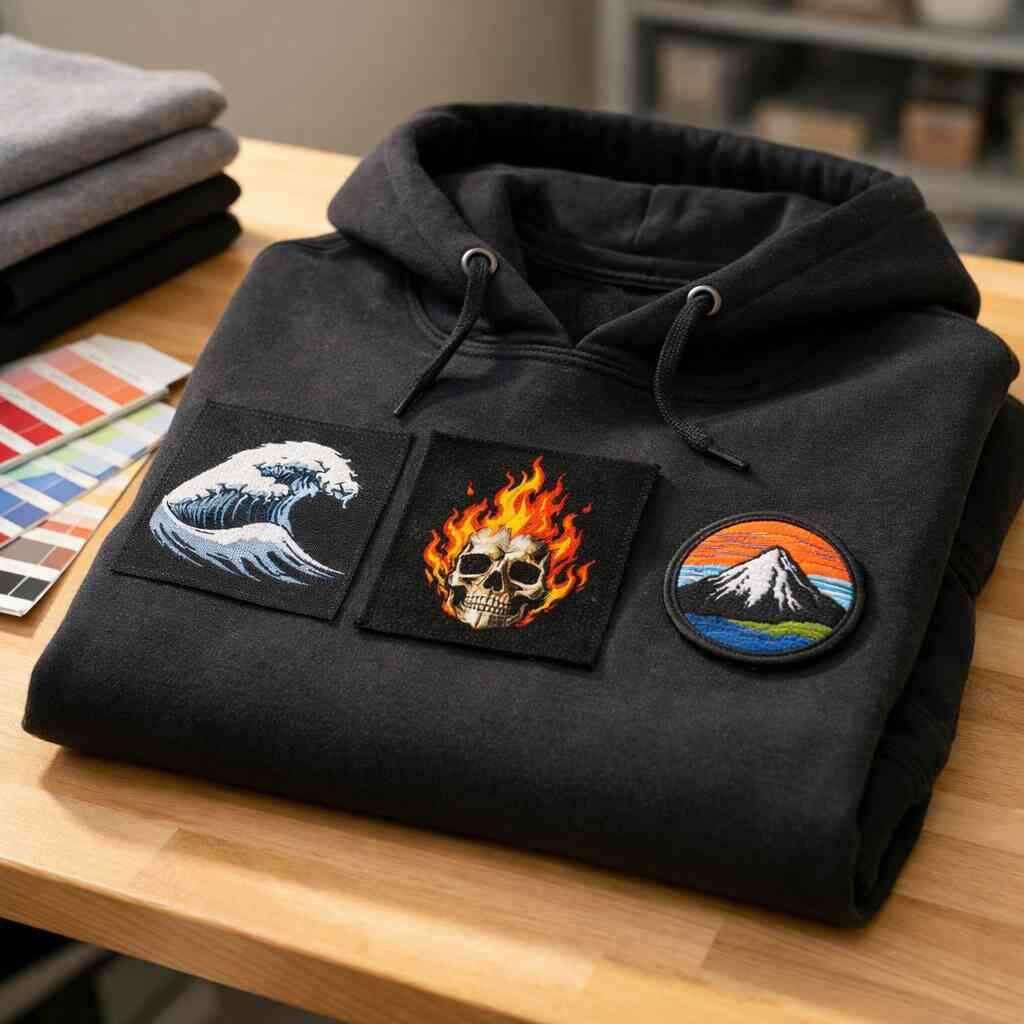
What Is the Best Print Method for Custom Hoodies
The best print method for custom hoodies depends on your artwork, fabric, and order size. For bold designs and larger runs, screen printing usually delivers the cleanest, most durable result. For detailed art, small orders, or mixed textures, DTG printing for hoodies, direct to film hoodie printing, embroidery, or heat transfer may be a better fit.
Key Takeaways
- Screen printing for hoodies is usually the strongest choice for bold logos, simple art, and bulk hoodie printing.
- DTG printing and direct-to-film work better for detailed artwork, gradients, and small runs, especially when you want no minimum custom hoodies.
- Embroidery for hoodies is best when you want a premium look for team hoodies, branded hoodies, or company hoodies.
- The best method also depends on the garment itself. Custom pullover hoodies, custom zip-up hoodies, and heavy fleece each respond differently to ink, film, and stitching.
- If you want help comparing hoodie print options, a local custom apparel shop in Commack, Long Island can guide you through artwork setup, fabric choice, and order size.
Why one hoodie looks crisp in one print method and blurry in another
The best print method for custom hoodies is the one that matches the hoodie fabric and the design, not just the image on your screen. Thick fleece, zipper seams, and textured fabric can make one method look sharp and another look soft or distorted. If you are staring at a proof and feeling unsure, that is normal; this part can be confusing for most people.
When screen printing on hoodies wins because the design is bold and the order is large
Screen printing on hoodies is the right choice when you need bold color, strong opacity, and a design that repeats cleanly across a larger order. It works especially well for team hoodies, event hoodies, school spirit hoodies, and company hoodies with fewer colors. For the right artwork, it delivers a crisp edge and a durable finish that holds up through regular wear.
A simple logo, a block-letter front, or a one-color back print is where screen printing shines. Shops often use mesh counts and underbase printing to control how ink sits on fleece, and water-based or plastisol systems can be adjusted for the garment. For many bulk hoodie printing jobs, it is still the most efficient choice.
One youth basketball league in Suffolk County wanted 80 sweatshirts for a winter tournament. The design was just a team name, number, and mascot, so screen printing beat every other option on clarity and consistency. The print stayed clean because the art was simple and the run was large enough to justify setup.
If you want to compare screen printing with other decoration methods, this method guide is a useful place to start. For hoodie-specific ordering, the same logic applies: simpler art plus higher quantity usually points toward screen printing.
Why DTG and direct to film can change the game for detailed art on fleece and zipper seams
DTG printing for hoodies and direct to film hoodie printing are often better for detailed art, small orders, or designs with fine lines and many colors. DTG, or direct to garment, prints directly into the fibers, which helps when the artwork has soft shading or a photographic look. Direct-to-film transfers handle tricky placement more easily, especially near seams, pockets, and zipper tape.
DTG usually needs pretreatment on cotton-rich garments, and quality shops rely on equipment like a Brother GTX Pro to keep detail consistent. That matters when you want a clean gradient or small text that would be costly to separate for screens. For durability, printed garments should be tested against wash-fastness and crocking standards; ASTM D5264 and AATCC crocking testing are common reference points in the industry.
Here is the part most people miss: zipper hoodies can interrupt a print area faster than the artwork can. A front graphic that looks perfect in a mockup may need to be shifted or split on the actual garment. Direct-to-film is often the safer choice when the placement is tight and you still want strong detail.
The print method that actually fits your hoodie, not just your artwork
The best print method for custom hoodies also depends on the garment type, the look you want, and how the hoodie will be worn. A pullover, zip-up, heavy fleece, or fashion-style sweatshirt each changes how ink, film, and thread sit on the surface. If you choose the decoration method first, you may end up forcing the wrong result. 
How custom hoodie design choices like zip-up hoodies, pullover hoodies, and heavy fleece push you toward different hoodie print options
Custom hoodie design starts with the garment itself. Custom pullover hoodies give you a wide, uninterrupted chest area, which makes screen printing and DTG easier. Custom zip-up hoodies create a seam down the middle, so direct-to-film, embroidery, or smaller left-chest placements often work better.
Heavy fleece changes the equation again. The thicker the pile, the more likely a print needs stronger opacity or a decoration style that does not depend on a perfectly flat surface. That is why many brands choose fleece hoodie decoration methods that include embroidery or a left-chest logo with a back print.
Hoodie typeBest-fit methodWhy it worksPullover hoodieScreen printing, DTGLarge flat print areaZip-up hoodieEmbroidery, direct-to-filmSeam-friendly placementHeavy fleeceEmbroidery, screen printingBetter visibility on thicker fabricDetailed fashion artDTG, direct-to-filmHandles color complexity wellIf you are comparing garment styles before you order, these hoodie options can help you picture how the decoration will sit on the fabric. For many buyers, the right hoodie is the one that makes the art look intentional, not forced.
Why embroidery, heat transfer, and custom hoodie logo printing solve different problems for team hoodies, branded hoodies, and school spirit wear
Embroidery for hoodies works best when you want texture, polish, and long-term wear. It is especially strong for branded hoodies, company hoodies, and school spirit hoodies where a stitched logo feels more premium than a printed graphic. If the design is small and clean, custom hoodie logo printing or logo digitizing can turn it into a sharp embroidered mark.
Heat transfer hoodie printing fills another niche. It is useful for names, numbers, player jerseys, and personalization when you need flexibility without a large setup. For event hoodies or custom hoodie gifts, it can be a practical middle ground, especially if you need a fast setup and a small run.
A school club in Commack once needed spirit wear with a tiny chest logo, student names, and a back design for a field trip fundraiser. Embroidery handled the logo, and heat transfer handled the names. That split kept the garments readable, balanced, and within a manageable production flow.
For shoppers comparing embroidery to print, this embroidery service page shows how stitched decoration fits into custom apparel. And if you are deciding between a hoodie and a sweatshirt for a logo, this comparison helps clarify the tradeoff before you place the order.
If you are ordering in Long Island, Commack, or Suffolk County, ask the shop how they handle logo digitizing, Pantone color matching, and placement on fleece. That is the difference between a hoodie that looks fine on screen and one that still looks sharp after wear. For local pickup details, the Commack shop page is the most direct place to check.
If you need custom hoodies, custom sweatshirt printing, or branded merchandise with clear guidance, Custom Shirt Printings is a solid local option in Commack, New York. You can design online with their free online designer or call +18337447811 for a quote and help choosing the right method for your artwork, fabric, and order size.
Frequently Asked Questions
Question: What is the best print method for custom hoodies if I want bold, durable artwork for team hoodies or company hoodies?
Answer: For bold artwork, simple logos, and larger orders, screen printing for hoodies is usually the strongest choice. It gives a clean look, solid color, and dependable durability, which is why it works so well for team hoodies, company hoodies, event hoodies, and school spirit hoodies. At Custom Shirt Printings in Commack, we can help you compare screen printing, embroidery, and other custom apparel printing options so your hoodie matches both the design and the fabric. If you are looking for custom shirt printing in Commack or custom hoodie printing near me, we can guide you toward the method that makes the design look sharp and professional.
Question: When should I choose DTG printing for hoodies or direct to film hoodie printing instead of screen printing?
Answer: DTG printing for hoodies and direct-to-film are often better when your artwork has fine detail, gradients, lots of colors, or smaller print areas. DTG, or direct to garment, is a smart fit for detailed custom hoodie design because it can capture soft shading and complex artwork well. Direct to film hoodie printing is also helpful for tricky placement on custom zip-up hoodies, seams, and pockets. If you are comparing custom shirt options for custom hoodies, Custom Shirt Printings can help you choose between DTG printing, screen printing, and heat transfer hoodie printing based on your artwork, garment style, and order size. That is especially useful for customers searching for custom shirt printing near me, fast turnaround printing, or no minimum custom hoodies.
Question: How does the blog What Is the Best Print Method for Custom Hoodies help me choose between custom pullover hoodies and custom zip-up hoodies?
Answer: The main thing to know is that the hoodie style affects the decoration method just as much as the artwork does. Custom pullover hoodies usually provide a larger uninterrupted print area, which makes screen printing and DTG printing easier. Custom zip-up hoodies can be more challenging because of the center seam, so direct-to-film, embroidery for hoodies, or smaller logo placements often work better. At Custom Shirt Printings, we help customers think through custom hoodie design from the start so the final piece looks intentional and comfortable to wear. If you are designing custom hoodies online, our team can help with logo shirt design, vector art conversion, and placement ideas so your finished hoodie works with the garment, not against it.
Question: Is embroidery for hoodies a good option for branded hoodies, promotional hoodies, or custom hoodie logo printing?
Answer: Yes, embroidery for hoodies is a great choice when you want a premium look, especially for branded hoodies, corporate hoodie apparel, school spirit wear, and custom embroidered hoodies. Embroidery gives your logo texture and a polished finish that feels elevated compared with some printed methods. It is especially strong for smaller left-chest logos or clean business apparel where long-term wear matters. At Custom Shirt Printings, we also help with logo digitizing so your artwork is ready for embroidery and looks clean on the final garment. If you need custom apparel, branded merchandise, or custom hoodie gifts, embroidery can be a very smart option.
Question: Can Custom Shirt Printings help me decide on the right hoodie print options for bulk hoodie printing, rush order hoodies, or personalized hoodies?
Answer: Yes, we can help you narrow down the best hoodie print options based on your timeline, artwork, and quantity. Whether you need bulk hoodie printing for a team, personalized hoodies for an event, or rush order hoodies for a deadline, we can help you compare screen printing, DTG printing, direct-to-film, embroidery, and heat transfer hoodie printing. We work with customers who want custom shirt printing, Long Island custom shirt printing, custom sweatshirt printing, and other custom apparel solutions, and we can also help you order custom shirts online or create your own hoodie with a free mockup. If you are searching for custom shirt printing in Commack or custom hoodie printing near me, Custom Shirt Printings is here to make the process easier and help you choose a method that fits the garment, the design, and the order size.