
Why Do Businesses Use Screen Printing for Work Shirts
Businesses use screen printing for work shirts because it delivers durable, consistent, and cost-effective branding on uniforms that get washed, stretched, and worn hard. If you need company apparel that still looks sharp after real use, screen printing is usually the safest choice.
Key Takeaways
- Screen printing for work shirts is a strong fit when you need long-lasting ink, clear logos, and consistent results across employee uniforms.
- DTG printing can work well for small runs and detailed art, but it is usually less durable on heavy-use workwear than a properly set-up screen print.
- Pantone matching, vector art conversion, and underbase printing help keep company shirts looking the same from one order to the next.
- For many businesses, bulk t-shirt discounts, wholesale custom shirts, and fast turnaround printing make screen printing the most practical decoration method.
- If you need help with custom shirt printing in Commack or Long Island custom shirt printing, Custom Shirt Printings can help with design, production, and pickup in Suffolk County.
Why a cheap work shirt can cost more when the job gets real
A cheap work shirt often costs more once it enters a real work setting because the decoration, fabric, and fit have to survive repeated washing, sweat, abrasion, and movement. Businesses in Commack and across Long Island usually need more than a logo. They need durable printed work shirts that still look professional after hard use, not just on day one.
What businesses in Commack and across Long Island need from a shirt before they ever need a logo
For business shirts, the shirt itself matters as much as the artwork. A good work shirt should hold up to bending, lifting, and repeated laundering without twisting, fading, or shrinking badly. That is why many buyers ask for custom workwear, employee uniforms, company apparel, or branded workwear rather than a simple one-time print.
Here is the part most people miss: the use case should decide the decoration method. A restaurant team, a construction crew, and office staff all need different levels of durability, breathability, and polish. On Long Island, where businesses often need shirts for field work, service calls, and customer-facing roles, the right garment choice saves headaches later.
A practical order usually starts with the use, not the design. For example:
- Team shirts for events may need fast production and bold color.
- Custom work shirts for field crews may need heavier fabric and strong ink adhesion.
- Corporate work shirts may need a cleaner look with fewer colors.
- Custom polo shirts can be better for front-desk or sales teams.
- Custom hoodies for staff may be useful for cooler warehouse or outdoor work.
If you are comparing methods for a crew order, this guide on screen printing and embroidery is a useful starting point.
Why screen printing holds up better than DTG printing on uniforms that get washed, stretched, and worn hard
Screen printing usually outlasts DTG printing on rough-use uniforms because the ink sits strongly on the garment and is built for repeat wear. DTG, or direct to garment, can be excellent for short runs and highly detailed art, but it depends more on the fabric, pretreatment, and wash care. For work shirts that get washed often, screen printing is usually more forgiving.
A solid screen print can handle frequent laundering, especially when the shop uses the right mesh count, ink chemistry, and cure temperature. By contrast, DTG often looks best on cotton-rich garments and can fade sooner if the shirt is heavily worn or washed aggressively. For many companies, that difference matters more than the upfront print method.
MethodBest forStrengthsTradeoffsScreen printingWork shirts, bulk orders, uniformsDurable, consistent, efficient at scaleLess ideal for many-color photo artDTG printingSmall runs, detailed graphicsSoft feel, good for complex imagesLess durable on heavy-use uniformsDirect-to-filmShort runs, mixed fabricsFlexible, quick setupCan feel less integrated than screen printHeat transferNames, numbers, specialty usesFast and versatileMay crack or lift sooner on hard-worn apparelIf you want a deeper comparison, see direct-to-film vs. screen printing.
We recently worked with a local crew that needed shirts for daily jobsite use, not a one-off event. They wanted a clean logo on the chest and a larger back print that would survive sweat and weekly washing. Screen printing made more sense than DTG because the order needed consistency, not just visual detail on a sample.
The production choices that make branded workwear look sharp instead of sloppy
Branded workwear looks professional when the art, color, and garment are prepared correctly before printing starts. The biggest quality differences come from vector art conversion, Pantone matching, and the right print method for the fabric. Those choices separate crisp company shirts from uneven, amateur-looking apparel.
How Pantone matching, underbase printing, and vector art conversion keep company shirts consistent across every order
Pantone matching helps keep your brand colors stable from one reorder to the next. That matters when you need the same red, navy, or charcoal across custom tees, custom sweatshirts, and custom polo shirts. We also rely on vector art conversion when a logo arrives as a low-resolution file, because clean vector art scales without pixelation. For dark garments, underbase printing is often the difference between dull ink and strong color. The white underbase gives top colors a solid foundation, especially on black or navy shirts. Without it, certain inks can sink into the fabric and lose contrast. A simple prep checklist helps a lot: 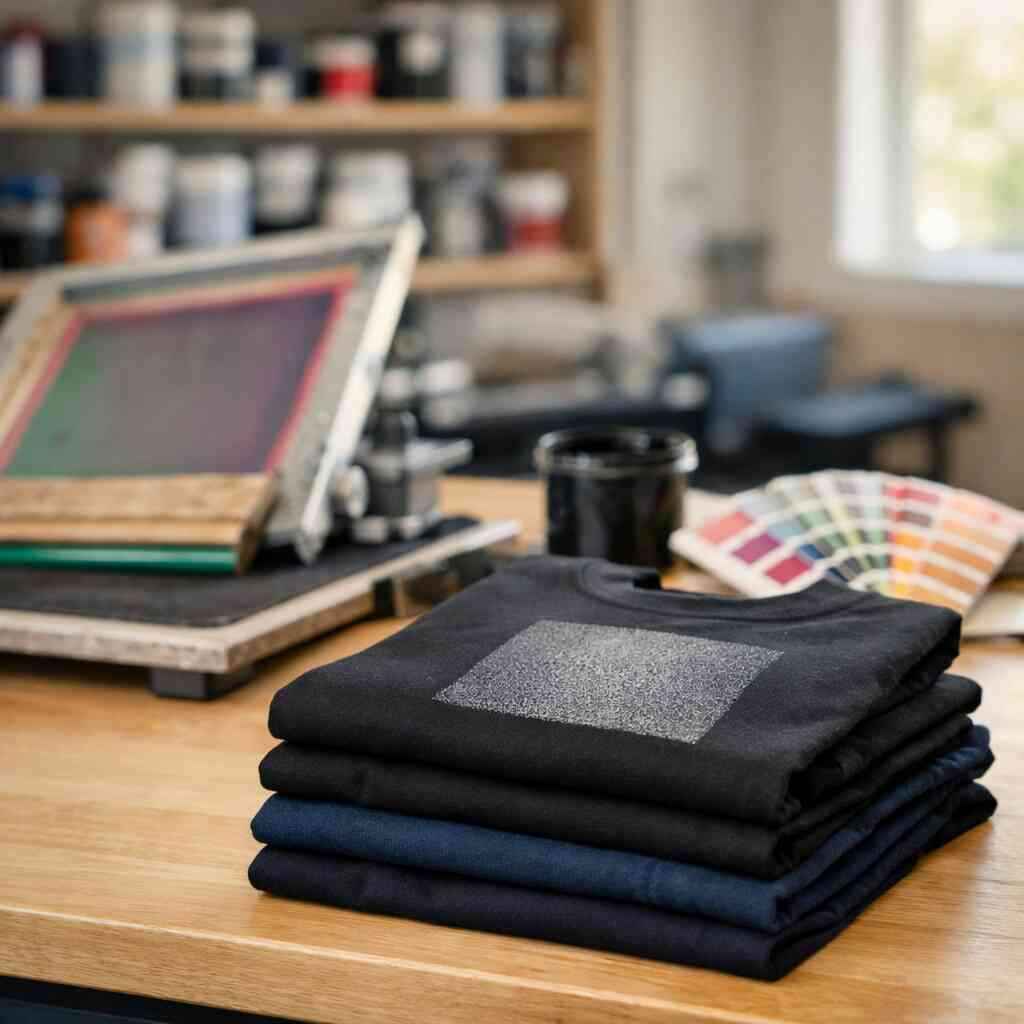
- Send the logo in vector format if possible.
- Keep colors defined, not vague.
- Identify any brand standards or Pantone numbers.
- Tell the shop which garment colors you want.
- Review the proof carefully before production.
For design help, you can use the custom work design guide or start with our online designer if you want to upload artwork and build a mockup first.
When screen printing beats embroidery, heat transfer, and direct-to-film for custom work shirts, polos, hoodies, and team apparel
Screen printing beats other methods when you need volume, bold color, and a lower cost per piece on repeated runs. It is especially strong for custom t-shirt options, custom long sleeve shirts, custom v-neck tees, custom raglan shirts, and many event shirts. For larger company orders, it often gives the cleanest blend of durability and value.
Decoration methodStrongest use caseWhy businesses choose itScreen printingBulk work shirts, team apparel, promo apparelDurable, efficient, consistentEmbroideryPolo shirts, hats, premium uniformsRaised texture, polished lookHeat transferNames, numbers, small specialty runsQuick setup, flexible placementDirect-to-filmMixed fabrics, shorter runsFast setup, good detailEmbroidery still has a place for custom embroidered caps, custom hats, and some custom polo shirts, especially when a company wants a more elevated finish. If you are deciding between methods, the guide on screen printing vs. embroidery can help. For many shops, the real answer is not one method forever. It is choosing the right one for the garment and the job.
On thicker garments like hoodies and fleece, some companies choose embroidery for the chest logo and screen printing for larger graphics. That mix can work well on custom hoodies, custom sweatshirts, and even custom workwear for construction. If you need a cleaner office look, embroidery may win. If you need a bold crew shirt, screen printing usually wins.
When to place the order, what to send, and how to get work shirts that are actually ready to wear
You should place the order as soon as your headcount, artwork, and garment choices are clear. The fastest and cleanest jobs happen when the shop gets a usable file, a clear proof approval, and a realistic deadline. For custom shirt printing in Commack, that preparation matters more than most people expect.
What file setup, logo shirt design details, and proof review matter most before custom shirt printing in Commack NY
The best file for logo shirt design is a vector file, usually AI, EPS, or PDF with text outlined. If you only have a JPG or PNG, the shop may still work with it, but the image has to be sharp enough for print. Blurry files, tiny screenshots, and copied logos from a website can slow things down.
A good proof review should check more than spelling. Look at:
- Logo size and placement
- Shirt color and ink color
- Chest, sleeve, or back placement
- Garment style and size breakdown
- Any extra notes for names or departments
If you need help deciding what style fits your crew, this page on choosing custom work shirts is a practical reference. For businesses that want the order process explained, our screen printing services page shows how custom jobs are typically handled from art setup to final print.
One contractor in Suffolk County came in with a faded logo from an old JPEG and expected it to print cleanly on dark shirts. We converted it to vector, fixed the edges, and changed the underbase so the logo would read clearly from across a parking lot. That kind of cleanup is common, and it saves the order from looking rushed.
How to choose bulk t-shirt discounts, fast turnaround printing, and pickup or delivery options for Suffolk County workwear
If you need several shirts for staff, bulk t-shirt discounts usually make screen printing the most practical choice. The per-piece cost often improves as quantity rises, which helps with wholesale custom shirts, promotional apparel, and custom t-shirts for employees. For smaller orders, ask about no minimum custom shirts or alternative print methods if the quantity is very low.
When timing matters, ask about fast turnaround printing and rush order t-shirts before you approve the proof. The real schedule depends on garment availability, art approval, and the print queue, so it is better to confirm than assume. For orders in and around Commack, pickup can be easier than shipping, especially if you are trying to outfit a crew quickly.
If you want to see the shop location and pickup area, check our Commack page. You can also review direct-to-garment services or direct-to-film printing if your project calls for a different method than screen printing. For safety and comfort, many customers also ask about ink standards; water-based inks can be a strong option when the garment and artwork fit the process, and the EPA explains general solvent and print-material handling on its pollution prevention guidance pages.
If you need custom work shirts, branded merchandise, or company apparel for a team, event, or trade crew, Custom Shirt Printings in Commack can help you sort out the garment, the art, and the print method without overcomplicating it. You do not have to figure it all out today. Bring your logo, your count, and your deadline, then call +1 833-744-7811 for a quote and next-step guidance.
Frequently Asked Questions
Question: Why do businesses use screen printing for work shirts instead of DTG printing or other custom t-shirt options?
Answer: Businesses often choose screen printing for work shirts because it is durable, consistent, and well suited for employee uniforms that get washed and worn often. Compared with DTG printing, screen printing usually holds up better on heavy-use apparel like business shirts, company apparel, and branded workwear. It also works especially well for bulk t-shirt discounts and wholesale custom shirts, which makes it a practical choice for custom apparel for businesses that need the same logo on many garments. At Custom Shirt Printings in Commack, we can help you compare screen printing vs. DTG printing, direct-to-film, and embroidery so you can choose the right method for your custom work shirt printing project.
Question: How do you keep logo shirt design colors consistent on custom workwear for teams and corporate work shirts?
Answer: Color consistency starts with good artwork and the right production setup. We use vector art conversion when needed so logos stay crisp at any size, and Pantone matching helps keep brand colors consistent across reorders, team shirts, event shirts, and corporate work shirts. For darker garments, underbase printing can help the artwork stand out clearly, which is important for custom workwear for teams and durable printed work shirts. If you upload artwork through our custom shirt design online tools or bring in a file for logo digitizing, we can help review the proof so your custom apparel looks professional from the first print to future reorders.
Question: What types of custom apparel work best for screen printing at your custom print shop in Commack?
Answer: Screen printing is a strong fit for many types of custom apparel, especially custom tees, custom long sleeve shirts, custom v-neck tees, custom raglan shirts, custom sweatshirts, and custom hoodies for staff. It is also a popular option for team shirts, school spirit wear, promotional apparel, branded merchandise, and custom workwear for construction crews, police shirts, and fire department shirts when the design needs to be bold and repeatable. If your project needs a cleaner finish for custom polo shirts or custom embroidered caps, we can also discuss embroidery or a mixed-decoration approach. The best option depends on the garment, the art, and how the shirts will be used.
Question: Can Custom Shirt Printings help with rush order t-shirts, fast turnaround printing, or no minimum custom shirts for a small crew?
Answer: Yes, we can help guide you toward the right solution based on your quantity, deadline, and artwork. For smaller runs, no minimum custom shirts may be possible depending on the decoration method, garment selection, and production schedule. For larger jobs, screen printing often becomes the most efficient route because it supports bulk t-shirt discounts and strong consistency across the full order. If you need rush order t-shirts or fast turnaround printing, it is best to contact us early so we can review the artwork, garment availability, and print method before confirming the order. We focus on making the process straightforward for custom shirt printing in Commack, Long Island custom shirt printing, and Suffolk County screen printing customers.
Question: How do I order custom shirts online if I need custom t-shirt options for business shirts, event shirts, or promotional giveaways?
Answer: You can order custom shirts online by starting with your design, selecting the apparel style, and uploading artwork through our design process. If you are creating company apparel, branded workwear, event merchandise, or custom t-shirts for employees, we can help you choose the right print method and garment type before production begins. Our team can assist with custom shirt printing near me searches from Long Island customers who want a local custom apparel company with design help, proof review, and practical guidance. Whether you need custom hoodies, custom polo shirts, custom tote bags, or personalized t-shirts, we can help you build a clean t-shirt mockup and printing proof so your order is ready for approval.