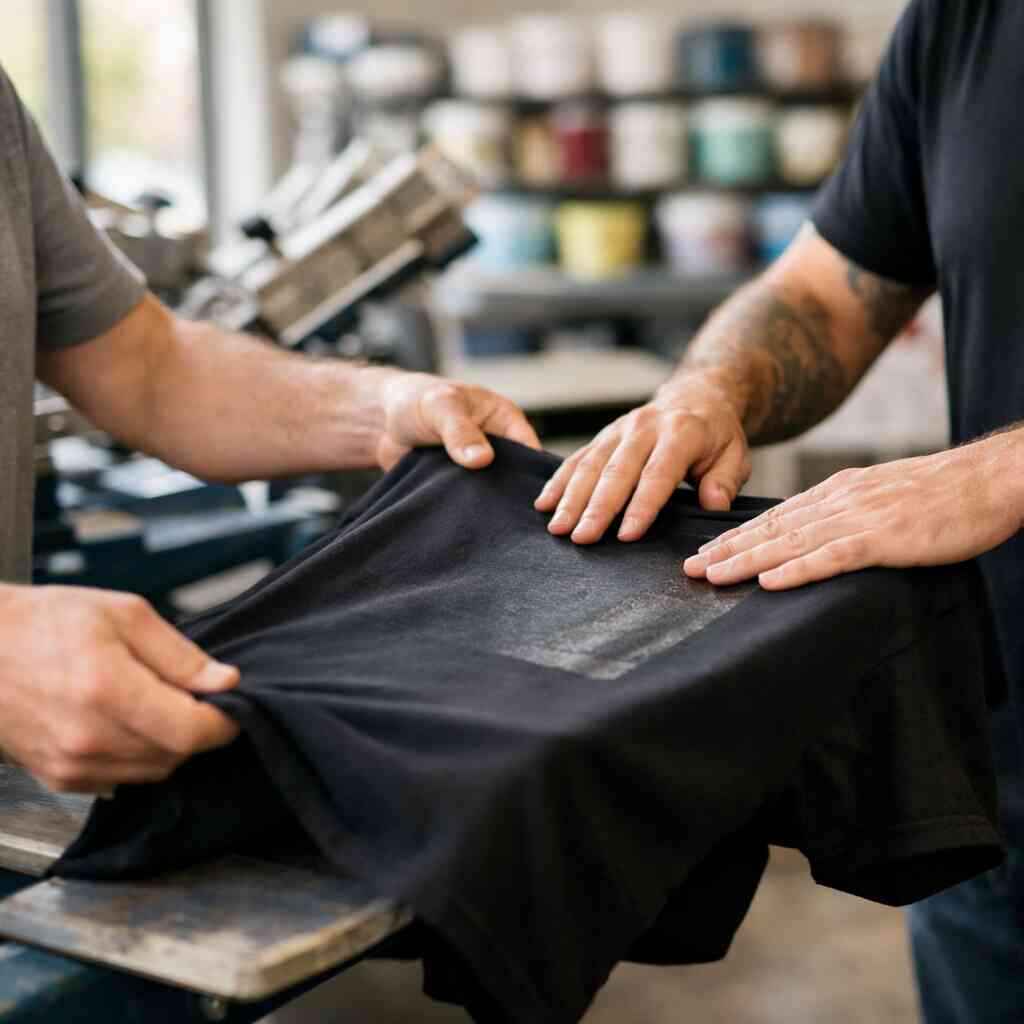
What Is the Difference Between DTG and Screen Printing ROI
You need shirts that look sharp, arrive on time, and still leave room for profit. That pressure is real. If you are reading this because a quote felt too high, take a breath. The cheaper number is not always the smarter one, especially in custom shirt printing. The real question is not just DTG versus screen printing. It is which method protects your margin, your timeline, and your sanity.
Why the cheaper quote can lose money when DTG and screen printing are compared side by side
The real cost of one shirt versus one hundred shirts
Most people compare the quote line by line and stop too early. That is where the trap starts. A single shirt often favors direct to garment printing on T-shirts because there is little setup. A hundred shirts usually flips the math toward screen printing. The print itself matters, but volume matters more.
We hear this from clients almost every week. A local coach wants 18 team shirts, while a business owner wants 120 event shirts for staff and volunteers. The coach usually wants flexibility and no inventory risk. The business owner usually wants bulk t-shirt discounts and a lower per-piece cost. In both cases, the cheapest quote can hide the bigger cost: wasted time, reprints, or the wrong print method for the order size.
Why setup fees change the math more than the print itself
Setup fees often decide the ROI before ink even hits fabric. Screen printing needs screens, separations, and press prep. DTG printing skips most of that, but it uses more labor per piece. So the question is not, “Which method is cheaper?” It is, “Which fixed cost makes sense for this order?”
Here is the part most customers miss. A quote with a lower print price can still cost more overall if it includes more setup, more proofing, or more waste. That is why screen printing return on investment for bulk shirts often improves as the order grows. Setup gets spread across more garments. The math gets kinder. That is also why custom shirt pricing should always be read with the order size in mind.
Where custom shirt printing in Commack and Long Island shifts the equation
Local service changes ROI in ways online calculators ignore. If you need custom shirt printing in Commack and on Long Island, pickup can save shipping delays and reship fees. That matters for rush order t-shirts and event deadlines. It also matters when you need to check a sample before approving the run. For businesses in Suffolk County, local access can protect both time and money.
We saw this with a small nonprofit preparing family reunion shirts and event merchandise. They had a tight schedule and a mixed order: adult tees, youth shirts, and a few tote bags. Shipping would have added uncertainty. Picking up locally in Commack solved the timing problem and kept the project on budget. Sometimes ROI is not about the lowest quote. It is about avoiding costly chaos.
How rush order t-shirts and no minimum custom shirts change ROI expectations
No minimum custom shirts sound perfect, and sometimes they are. But ROI changes when you only need a few pieces fast. DTG can shine for small runs because it avoids screen setup. That makes it useful for personalized t-shirts, custom baby onesies, and sample orders. Still, a rush job can increase labor and prioritize speed over unit cost.
That is why fast turnaround printing needs a different ROI lens. If your deadline is tight, the most expensive option may be the one that misses the event. For custom tees and custom hoodies, the right method depends on quantity, artwork, and timing. A local shop that offers custom shirt printing near me can often give you a more realistic path than a generic online cart. If you need custom shirt pricing and minimum order options in Commack NY, ask how the method changes with size, speed, and artwork complexity.
The hidden cost stack behind each print method and what your margin is really paying for
Screen printing return on investment through screens, setup, and production speed
Screen printing ROI starts with preparation. Each color usually needs its own screen, and each screen must be burned, aligned, and tested. That sounds expensive, but it pays back fast on larger runs. Once the press is running, a machine like an M&R Gauntlet can move serious volume. That speed lowers labor cost per garment.
On larger jobs, screen printing also handles custom apparel with repeatable consistency. It works well for company apparel, team shirts, and school spirit wear. The margin improves because the setup cost gets spread thin. If you are ordering wholesale custom shirts, this is often the strongest path. For high-volume work, bulk order screen printing savings for team shirts and event apparel can be the difference between a healthy margin and a painful one.
DTG printing cost analysis through pretreatment, ink use, and labor per piece
DTG printing looks simpler, but the cost stack is still real. Each garment needs pretreatment, especially for white ink or dark shirts. Ink use varies by artwork coverage, shirt color, and fabric type. Labor also stays higher per piece because each garment runs more individually. A Brother GTX Pro can produce excellent detail, but it still needs careful handling.
For small runs, DTG can be smart. For larger runs, it can get expensive quickly. That is the heart of small order printing economics for custom tees and hoodies. The ink, the pretreat, and the human time all add up. If your art has a lot of color or photographic detail, DTG may still win. But if you want a lower unit cost on a big order, the math usually leans away from it.
How underbase printing, screen mesh counts, and Pantone matching affect cost
Color complexity changes ROI faster than most people expect. Underbase printing adds an extra layer under dark garments, which improves brightness but increases labor and ink. Screen mesh counts also matter because fine detail needs the right mesh, while heavy ink deposits need lower mesh. Then there is Pantone matching, which keeps brand colors consistent but can require more careful separation and press setup.
That is why a logo with six colors can cost more than a simple one-color design. It is not just the number of colors. It is the way those colors interact on the garment. Water-based ink can feel softer, while other inks may offer different durability or opacity. The wrong setup can destroy your margin in silence. The right setup protects it.
Why vector art conversion and logo digitizing can quietly protect profit margins
Bad files are expensive. Low-resolution logos create extra labor, awkward edges, and avoidable reprints. Vector art conversion cleans up artwork so it scales without losing sharpness. Logo digitizing does the same kind of protection for embroidery and can help keep decoration clean and efficient. A crisp file saves time at the press and on the approval screen.
One small business brought us a blurry logo pulled from a social post. It looked fine at thumbnail size, but it fell apart on shirt size. We rebuilt it into vector art before production. That prevented a reprint and kept the job moving. If you need help with logo design and vector art conversion for shirts, the file work is often where hidden profit gets saved.
When DTG wins and when screen printing wins for real world custom apparel orders
Small order printing economics for custom tees, custom hoodies, and custom tote bags
DTG often wins when the order is small and the art is detailed. That is especially true for custom tees, custom hoodies, and custom tote bags with lots of colors. You avoid screen charges, so the entry cost stays lower. For a short-run project, that can make a huge difference.
This is where custom shirt design online can feel empowering. You upload artwork, preview placement, and place a small order without overcommitting. Still, the design must be ready for print. A clean file and a clear mockup keep the process smooth. If you want help choosing between DTG vs. screen printing ROI for custom apparel, small runs usually favor DTG unless the design is simple and the quantity is climbing.
Bulk order screen printing savings for team shirts, event shirts, and company apparel
Screen printing usually wins on volume. That is the simple truth. Team shirts, event shirts, and company apparel become much more cost-effective when a design is repeated across dozens or hundreds of garments. The labor does not rise as quickly as DTG. The setup gets amortized, and the per-shirt cost drops.
That makes screen printing a strong fit for promotional apparel, branded merchandise, and event merchandise. It also works well for custom sports jerseys and custom apparel for churches when the design is stable. If you are comparing unit economics, look at the spread over the full order. For bigger runs, screen printing return on investment for bulk shirts is usually the more predictable path.
Why print on demand profitability looks different from wholesale custom shirts
Print on demand sounds efficient because it removes inventory risk. That is true. But profit per shirt is often thinner, and production decisions become more sensitive. You may sell one shirt at a time, but each order still carries labor, file prep, and fulfillment cost. That is why print on demand profitability for personalized t-shirts looks very different from wholesale custom shirts. Wholesale orders reward planning. Print on demand rewards flexibility. Neither is automatically better. If you are selling custom printed masks, custom drawstring bags, or custom baby onesies, the ideal method depends on how often you repeat the design. In our experience, the biggest mistake is mixing a wholesale mindset with a one-off production model. 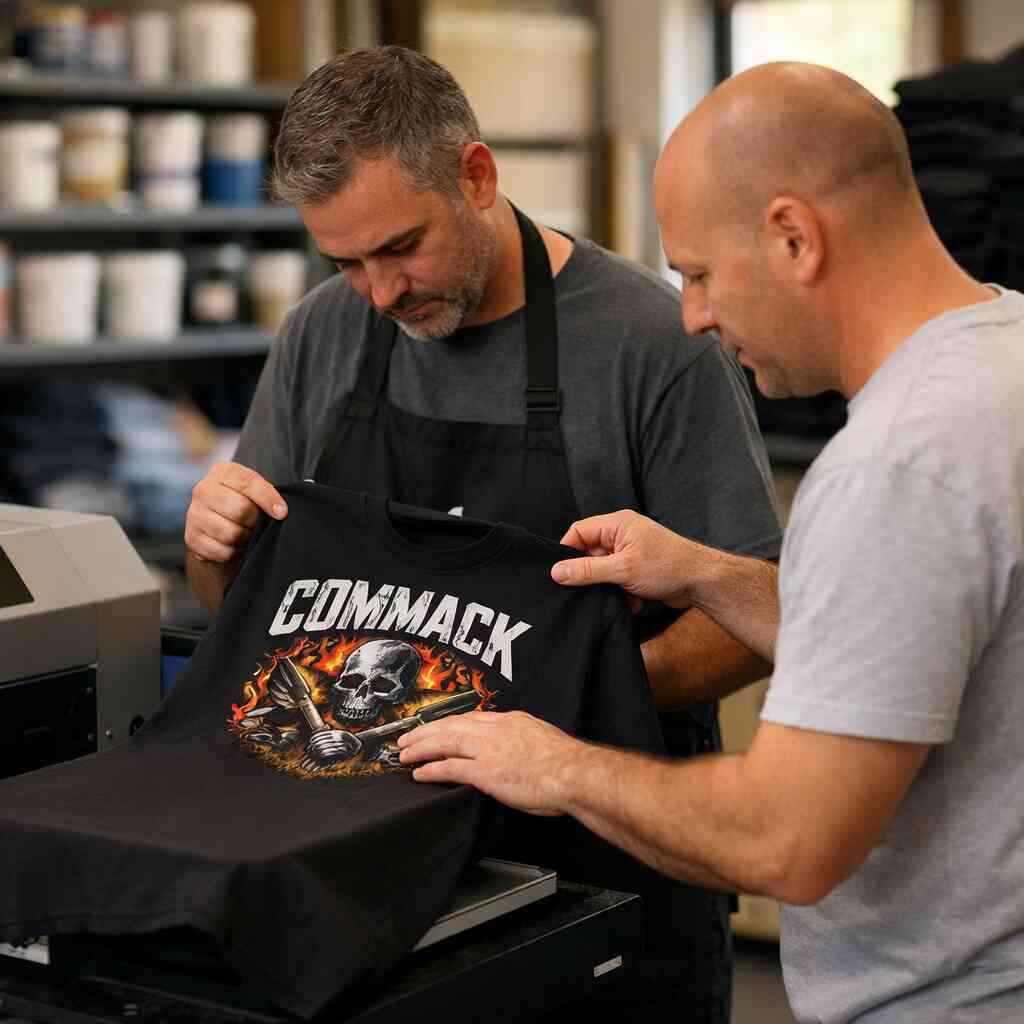
How custom shirt design online changes the decision for personalized t-shirts and branded merchandise
Online design tools make ordering easier, but they also change expectations. People assume every method handles every design equally. It does not. A complex gradient, a tiny logo, or a photo-heavy layout can push you toward DTG. A simple one- or two-color logo often leans toward screen printing. That is where an online t-shirt designer helps you visualize the tradeoff.
A restaurant owner once brought us a logo with fine lines, small text, and a dark shirt choice. The first mockup looked good on screen but weak in production. We simplified the art and changed the decoration method. The final piece looked cleaner and sold better at pickup. Good ROI often begins with better design decisions, not cheaper ink.
The production details that change ROI before the press ever starts running
How free mockup, t-shirt mockup and printing, and free design help reduce costly reprints
A solid mockup can save real money. Free mockup review catches placement issues, color problems, and file mistakes before printing starts. T-shirt mockup and printing should always be paired with approval, not treated as a formality. A rushed proof can create a full reprint, and that is the kind of waste nobody wants.
This is especially important for logo shirt design and custom hoodie design. Small placement changes can make the difference between polished and awkward. The same is true for custom long sleeve shirts, custom v-neck tees, and custom raglan shirts. If you want help before production, design custom shirts online with free mockup help can reduce avoidable mistakes. Good proofing is not a luxury. It is ROI protection.
Why OEKO-TEX certified water-based ink, DTG ink types, and durability tests matter
Ink choice affects both quality and trust. OEKO-TEX certified water-based ink is valued because it supports a softer hand feel and safety expectations, especially for youth and family items. Different DTG ink types behave differently on cotton, blends, and dark garments. That means durability and appearance should both be part of the ROI conversation. A shirt that fades fast costs more than it first appears.
Durability testing matters too. Wash-fastness and crocking checks help show whether the print will hold up. On the shop side, we pay attention to rubbing and wash performance because replacement orders are expensive. That is why direct to garment vs. screen printing cost comparison should never ignore wear life. A cheaper print that fails early is not cheap at all.
What pretreatment for DTG and 110 mesh for white ink do to quality and waste
Pretreatment is not optional for good DTG results. It helps white ink sit properly and keeps colors from sinking into the fabric. Without it, prints can look dull or wash out faster. 110 mesh for white ink is another quality choice that supports ink deposit and opacity. But it also requires careful control, or you risk buildup and waste.
That means the real cost is not just materials. It is precision. Too much pretreat leaves residue. Too little leaves weak print quality. In a busy shop, those mistakes add up fast. The same goes for custom shirt printing ROI for businesses; clean production steps protect the bottom line. If you are comparing methods, ask how each one handles waste before you approve the order.
Where embroidery vs printing ROI fits for custom hats, custom polo shirts, and custom workwear
Sometimes the best answer is neither DTG nor screen printing. Embroidery vs printing ROI becomes important on custom hats, custom polo shirts, and custom workwear. Embroidery has a premium look and excellent durability. It also uses logo digitizing, stabilizer choices, and stitch counts that affect cost and finish.
A construction company once needed durable shirts and hats for supervisors. Print would have worked on tees, but embroidery made more sense for polos and caps. The result looked sharper in the field and held up longer. That is the right kind of ROI. If you need custom embroidered caps or stitched apparel, decoration choice should match the garment, not just the budget.
Which order type should you choose next if you want better ROI and fewer headaches
The best method for business shirts, school spirit wear, and promotional apparel
For business shirts, screen printing usually works well when the logo is stable and the order is larger. For school spirit wear, the decision depends on quantity, colors, and deadlines. For promotional apparel, the goal is often wide distribution at a controlled cost. That usually favors screen printing on larger runs and DTG on smaller, personalized ones.
If your order includes custom apparel for churches, custom construction shirts, or custom fire department shirts, durability and consistency matter as much as price. The best method is the one that matches use, fabric, and quantity. Not every project should chase the lowest quote. Some should chase fewer headaches. For how custom shirt printing improves brand ROI in 2026, the smartest orders are the ones people actually wear.
When custom shirt printing near me makes pickup in Commack worth it for Suffolk County customers
Local pickup can be a huge advantage. If you are searching for custom shirt printing near me, a shop in Commack can save a delivery delay and help you inspect the order sooner. That matters across Suffolk County screen printing jobs, especially when multiple departments or teams need their items at once. Our shop at 1139-7 Jericho Tpk. in Commack serves Long Island customers who want a practical, local option.
Pickup also helps when you need a quick check on custom polo shirts, custom sweatshirts, or custom hats before the full event. You can catch a sizing issue early. You can verify artwork placement. That small convenience can protect a much bigger budget. If you want fast turnaround printing for custom shirts near Commack, local service often keeps the project simpler.
How to balance fast turnaround printing with custom shirt pricing and minimum order goals
Speed has a cost. That does not mean rush jobs are bad. It means you should expect tradeoffs. A tight deadline may push you toward DTG, heat transfer, or even direct-to-film in some cases. A larger window may let screen printing win on unit cost. Either way, turnaround time should be part of the quote discussion, not an afterthought.
Here is a simple way to think about it:
- Small run, many colors, no minimum: DTG often fits.
- Large run, simple logo, stable artwork: screen printing often wins.
- Hats, polos, and workwear: embroidery can be the better ROI.
- Extremely fast deadlines: ask what method is truly available, not just advertised.
If you are balancing cheap custom shirts with quality, ask for the full picture. Custom shirt printing in Commack and on Long Island can be more efficient when you need direct guidance, not a checkout cart guessing for you.
The next move for order custom shirts online from our Commack NY custom printing shop in 11725
If you want a better decision, start with the garment count, artwork, and deadline. Then compare the method that protects your margin, not just the sticker price. You can upload artwork, create your own shirt, or ask for free design help if the file is not ready. That is often the fastest way to avoid waste.
For order custom shirts online from our Commack NY custom printing shop in 11725, the smartest move is simple. Gather your quantity, your target garment type, and your art file. Then ask which method gives you the best balance of print quality, speed, and cost. If you need help choosing, reach out through our contact page. You do not have to solve it all today. Start with one message, and we will help you narrow the path.
Frequently Asked Questions
Question: What is the difference between DTG and screen printing ROI in custom shirt printing, and how do I know which option is better for my order?
Answer: The biggest difference comes down to order size, artwork complexity, and setup costs. DTG printing is often a strong choice for small order printing economics, especially when you need no minimum custom shirts, personalized t-shirts, or detailed artwork with lots of colors. Screen printing usually delivers better screen printing return on investment on larger runs because the setup cost gets spread across more garments, which can improve bulk order screen printing savings for team shirts, event shirts, and company apparel. At Custom Shirt Printings in Commack, we help customers compare direct to garment vs screen printing based on the actual job, not just the sticker price. If you are ordering custom tees, custom hoodies, or custom tote bags, we can review your artwork, quantity, and turnaround time to help you choose the method that protects your margin and gives you high-quality custom shirts.
Question: How does custom shirt printing in Commack help when I need fast turnaround printing or rush order t-shirts for an event?
Answer: Local service can make a big difference when you are trying to hit a deadline. If you are searching for custom shirt printing near me or custom shirt printing in Commack, working with a local custom apparel company can reduce shipping uncertainty and make approval easier. That matters for rush order t-shirts, school spirit wear, family reunion shirts, promotional apparel, and event merchandise. We can guide you through custom shirt design online, upload artwork, and free mockup review so you can catch issues before production begins. For many customers on Long Island, especially in Suffolk County, picking up locally in Commack NY custom printing can keep the project moving smoothly without adding unnecessary stress.
Question: What should I prepare before ordering custom tees, business shirts, or company apparel to improve ROI and avoid reprints?
Answer: The best way to protect custom shirt printing ROI is to start with clean artwork, a clear quantity, and the right garment type. If possible, upload artwork in a vector format so logo shirt design stays sharp, and ask about vector art conversion if your file is low resolution. For logos and brand marks, Pantone matching can help keep colors consistent, while screen mesh counts, underbase printing, and DTG ink types may affect the final look and cost. A free mockup is also very helpful because it gives you a chance to review placement, sizing, and overall appearance before production. Whether you need custom polo shirts, custom sweatshirts, custom v-neck tees, or custom long sleeve shirts, preparing the file properly can reduce waste and help your order stay on budget.
Question: When does screen printing make more sense than DTG printing for bulk custom shirts, wholesale custom shirts, or branded merchandise?
Answer: Screen printing usually becomes the better value as quantity rises, especially for wholesale custom shirts, team shirts, event shirts, and branded merchandise with a simple design. Because the setup costs are shared across more garments, the per-piece cost often drops, which can improve apparel decoration profit margins. Screen printing is also a great fit for custom sports jerseys, custom apparel for churches, custom construction shirts, and custom fire department shirts when you want consistency and durability. DTG printing can still be the right choice for smaller jobs, highly detailed graphics, or custom baby onesies and custom printed masks, but for larger runs, screen printing often delivers stronger ROI. If you are comparing custom apparel production costs, we can walk you through the pros and cons so you can choose the most practical option.
Question: Does Custom Shirt Printings offer help with custom shirt design online, free design help, and order custom shirts online for 11725 custom shirts?
Answer: Yes, we do. Custom Shirt Printings makes it easy to design your own shirt, create your own shirt, or order custom shirts online from our Commack location in 11725. If your design needs cleanup, we can help with logo digitizing, vector art conversion, and free design help so your artwork is ready for production. We work with custom shirt options for custom hoodies, custom hats, custom embroidered caps, custom workwear, custom aprons, custom drawstring bags, and more. If you are planning personalized t-shirts or custom t-shirt options for a business, school, fundraiser, or event, our team can help you choose between screen printing, DTG printing, embroidery, heat transfer, or direct-to-film based on your goals. The result is a smoother ordering process, better print quality, and a custom apparel project that is built around your needs rather than a one-size-fits-all approach.