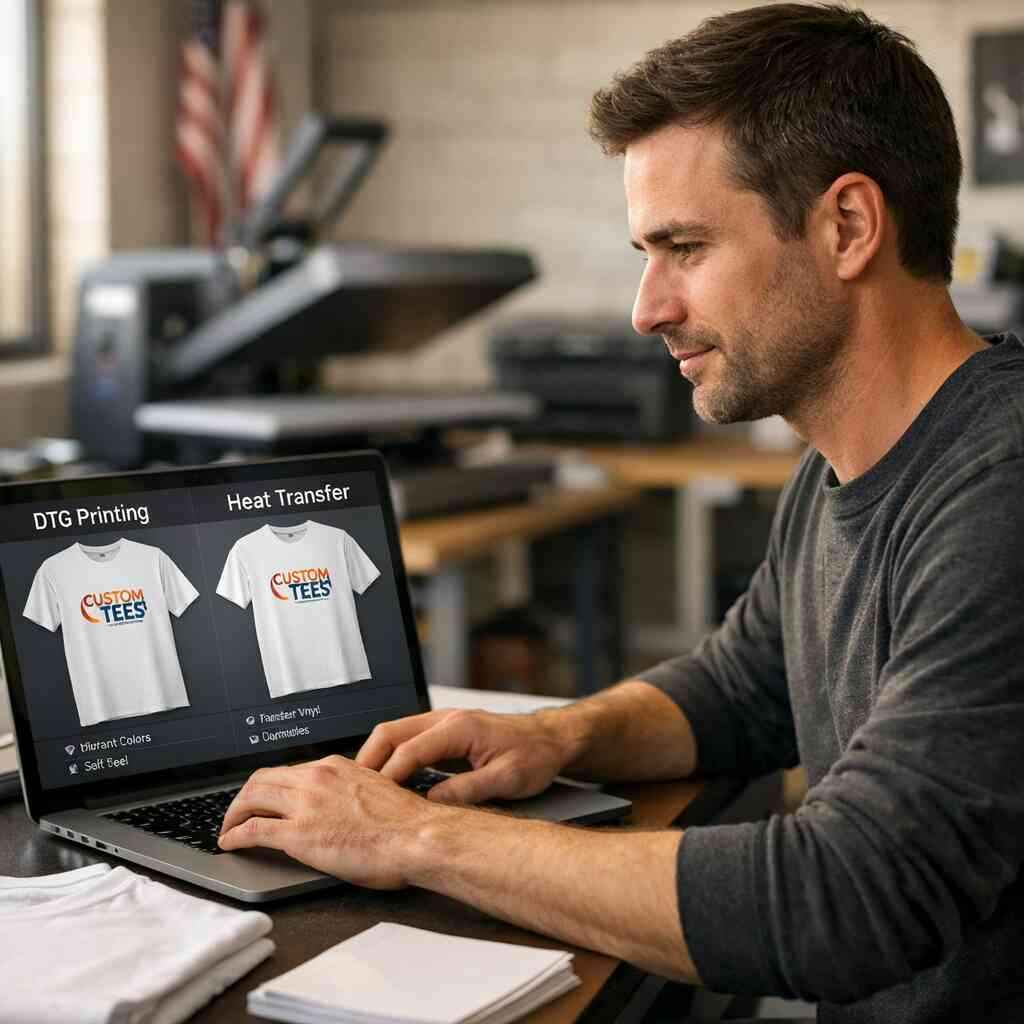
What Is the Difference Between DTG and Heat Transfer
DTG printing puts ink directly into the garment fibers for a softer feel and sharper detail on complex artwork. Heat transfer prints a design onto a carrier film or vinyl layer first, then bonds it to the shirt. That often means faster setup and a more noticeable print surface.
Key Takeaways
- DTG printing is usually the better choice for full-color logos, photo detail, and soft-hand custom tees.
- Heat transfer printing works well for short runs, names, numbers, and quick custom shirt printing jobs with simple artwork.
- DTG relies on pretreatment and water-based ink, while heat transfer builds a layer on top of the fabric.
- Shirt type, order size, and artwork prep often matter more than people expect when choosing between methods.
- If you want help deciding, a local shop like Custom Shirt Printings in Commack, Long Island, can match the method to your deadline and use case.
Why a shirt that looks perfect on screen can fall apart after a few washes
DTG and heat transfer can both look great on day one, but they behave differently once the shirt is worn, washed, and stretched. DTG usually feels lighter and more natural on cotton-rich garments, while heat transfer can feel smoother or thicker depending on the film or vinyl used. The real difference shows up in comfort, detail, and how the print ages.
When DTG printing wins for full-color logos and photo detail on custom tees
DTG printing is the better fit when you need fine detail, gradients, or photo-like art on custom tees. It handles complex logos, soft shadows, and small text better than most simple transfer setups because the ink lands directly in the fabric. For custom shirt printing in Commack, that makes DTG a strong choice for personalized t-shirts, logo shirt design, and small-batch custom apparel.
Here is the part most people miss: DTG is not just “a printer for shirts.” It depends on garment fiber content, pretreatment, and the color of the shirt. On light cotton shirts, you can get a very clean print; on dark shirts, white underbase work matters a lot more. If you want a deeper dive, our Direct to Garment (DTG) Services page and The Difference Between DTG and Screen Printing for Brands break down how the method compares with other options.
One client looking for school spirit wear wanted a detailed mascot with a gradient background and tiny type. Screen printing would have been less practical for that artwork at the quantity they needed, and heat transfer would have added too much surface feel. DTG gave them the clean detail they wanted without making the shirt stiff.
When heat transfer makes more sense for short runs, names, and fast one off jobs
Heat transfer makes more sense when you need a small number of shirts, individual names, or a quick turnaround with simple artwork. It is especially practical for rush order t-shirts, event shirts, and one-off pieces where setup time matters more than print softness. If the job is short, variable, or highly personalized, heat transfer can be the smarter path. A simple comparison helps:
FactorDTGHeat TransferBest forFull-color art, photos, soft feelNames, numbers, short runs, fast jobsPrint feelSofter, more blended into fabricMore layered or slightly raisedSetupRequires pretreatment and file prepUsually quicker for simple designsIdeal order sizeSmall to medium runsSmall runs and one-offsBest shirt typesCotton-rich garmentsMany fabric types, depending on methodIf you need a quick comparison between production methods, our The Difference Between DTG and DTF for Custom Tees page is useful because many customers are really choosing among DTF, DTG, and heat transfer without realizing it. That is common with custom shirt printing near me searches. People often want a result, not a technical lecture.
The print shop decision that changes color, feel, and price more than most people expect
The method you choose changes more than the image. It affects how the shirt feels, how colors hold up, how the garment stretches, and how much prep the shop needs before printing. For Long Island custom shirt printing, that decision can also shape your cost structure, especially on no minimum custom shirts and short-run jobs. 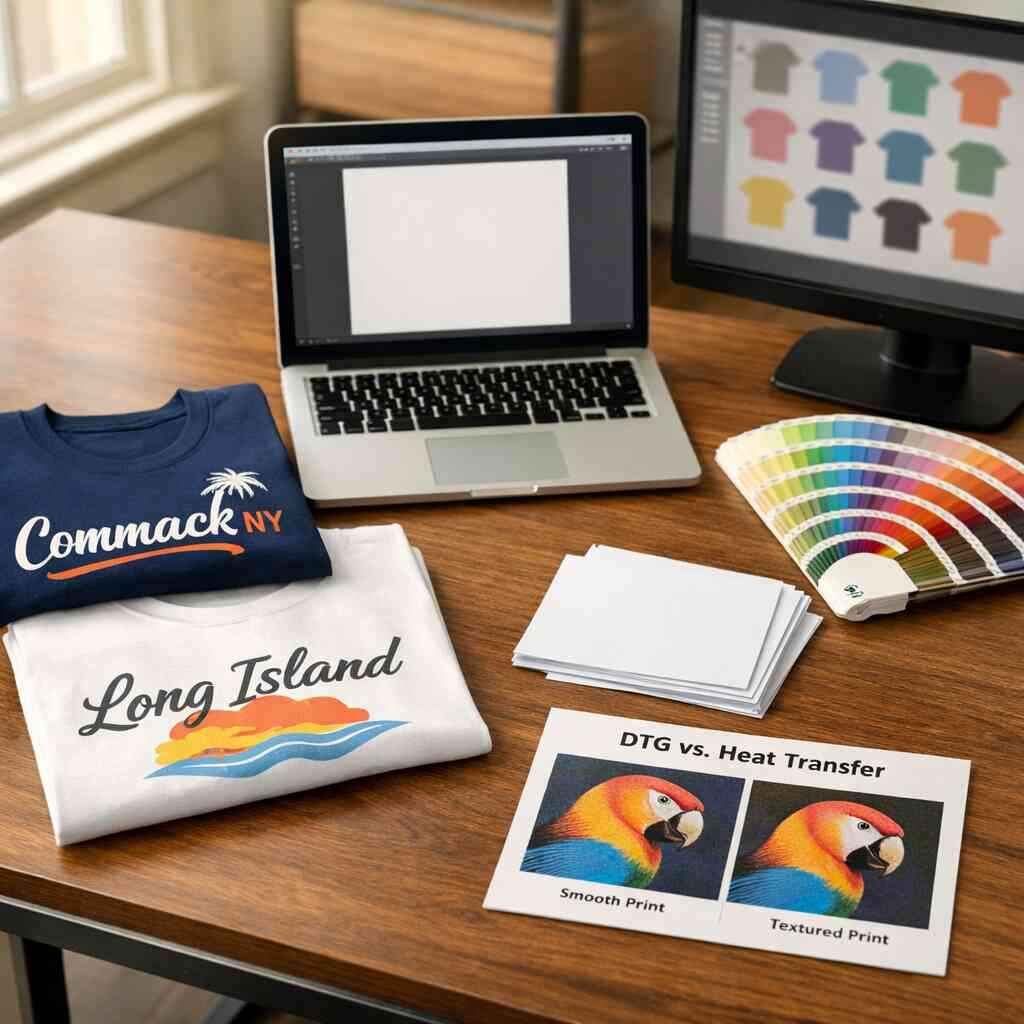
How direct to garment printing uses pretreatment, water-based ink, and garment fibers to create the final look
DTG printing works by spraying water-based ink directly onto the shirt, then curing it so the ink bonds with the fibers. On dark garments, the shirt usually gets pretreatment first so the white ink sits properly and the colors stay bright. That is why DTG can look almost painted into the fabric when it is done well.
We use that method carefully because file prep matters. Clean artwork, strong contrast, and proper sizing all affect the final result, especially on custom hoodies, custom sweatshirts, and custom baby onesies. A design that looks sharp on a mockup can still print poorly if the edges are too thin or the colors are too close together. For technical prep, Screen Printing Services and DTG each have their own file needs.
For quality control, shops often check color consistency against the Pantone Matching System and use garment testing logic similar to wash-fastness and crocking checks discussed by textile and testing standards groups like the AATCC. That matters when you want high-quality custom shirts for business shirts, team shirts, or company apparel.
How heat transfer printing builds a layer on top of the fabric and why that changes texture, stretch, and longevity
Heat transfer printing places the design on top of the shirt rather than inside the fibers. That creates a more defined layer, which can feel slightly thicker or smoother depending on the transfer type. Because the design sits on the surface, the shirt’s stretch and texture can affect how the print feels over time.
This method is often a good fit for custom hats, custom polo shirts, custom workwear, and custom sports jerseys where names or numbers need to stand out clearly. It also works well when the customer needs fast turnaround printing for an event or a family reunion shirt order. For more detail on apparel decoration choices, our Embroidery Services resource is helpful when you are weighing print versus stitch for branded merchandise.
One local contractor ordering custom construction shirts asked for reflective-style visibility, names, and a quick proof before pickup in Commack. Heat transfer was the practical choice because the artwork was simple, the deadline was tight, and each shirt needed personal details. That is the kind of job where speed and clarity matter more than ultra-soft hand feel.
If you are sorting through custom shirt printing in Commack, the simplest rule is this: choose DTG for detail and softness, and choose heat transfer for speed, names, and smaller custom runs. If you are still unsure, bring the artwork, the shirt type, and the deadline to a shop that can compare the options honestly. At Custom Shirt Printings in Commack, we help customers across Suffolk County and Long Island choose between DTG, screen printing, and embroidery based on the actual job, not a guess. If you want a quote, call +18337447811 and send over your design or file.
Frequently Asked Questions
Question: What is the difference between DTG and heat transfer in the blog What Is the Difference Between DTG and Heat Transfer, and which option is better for custom shirt printing in Commack?
Answer: DTG printing, also called direct to garment, prints ink directly into the fibers of the shirt, which usually gives custom tees a softer feel and better detail for full-color logos, photo art, and small text. Heat transfer printing places the design on top of the garment using a carrier film or vinyl layer, which can be a strong choice for names, numbers, and rush order t-shirts when speed matters. At Custom Shirt Printings in Commack, we help customers choose the right method based on the artwork, garment type, and order size, so your custom shirt printing near me search turns into the right final product instead of a guess. If you want custom apparel that looks clean, lasts well, and fits your use case, the best option depends on the design and how the shirts will be worn.
Question: Is DTG printing better for personalized t-shirts, school spirit wear, and logo shirt design than heat transfer printing?
Answer: DTG printing is often the better choice when you need detailed logo shirt design, personalized t-shirts, or school spirit wear with gradients, fine lines, and full-color artwork. Because direct to garment printing places water-based ink into the fabric, it can create a softer hand feel than many heat transfer options, especially on cotton-rich custom tees. That makes it a strong fit for custom shirt design online orders where the goal is a natural look and comfortable wear. If you are comparing DTG printing for custom tees with heat transfer vinyl for custom apparel, DTG is usually best for artwork complexity, while heat transfer is better for simple graphics, names, and quick production needs. Our team can review your file and help you decide whether DTG, screen printing, or embroidery is the best path for high-quality custom shirts.
Question: Can Custom Shirt Printings help with fast turnaround printing for event shirts, family reunion shirts, and company apparel?
Answer: Yes, Custom Shirt Printings works with customers looking for fast turnaround printing on event shirts, family reunion shirts, and company apparel, and we can help you compare DTG, heat transfer, screen printing, and embroidery based on the job. Heat transfer is often useful for smaller runs and simple designs because setup can be quick, while DTG is often better when you need full-color detail on custom tees or custom sweatshirts. For larger branded merchandise projects, screen printing or embroidery may also make sense depending on the garment and artwork. Whether you need business shirts, team shirts, or promotional apparel, we help you choose from the right custom t-shirt options so the final product fits the deadline, design, and budget goals of your order.
Question: What kinds of custom apparel can I order online from Custom Shirt Printings besides custom tees?
Answer: You can create your own shirt and order custom apparel online for a wide variety of products, including custom hoodies, custom polo shirts, custom hats, custom tote bags, custom sweatshirts, custom long sleeve shirts, custom v-neck tees, custom raglan shirts, custom tank tops, custom youth shirts, custom aprons, and custom drawstring bags. We also support orders for custom embroidered caps, custom workwear, branded merchandise, and event merchandise, depending on the decoration method that best fits the garment. If you are searching for custom shirt printing near me, our online process makes it easy to upload artwork, request free design help when needed, and get a free mockup before production. This is especially helpful for customers ordering no minimum custom shirts, wholesale custom shirts, or print-on-demand style projects that need flexibility and clear communication.
Question: Do you offer help with artwork setup like vector art conversion, logo digitizing, and file prep for DTG or heat transfer jobs?
Answer: Yes, we can help guide customers through artwork prep for custom shirt printing, including logo digitizing, vector art conversion, and file setup for methods like screen printing, DTG printing, heat transfer, and embroidery. Good file prep matters because a design that looks perfect on screen does not always print the same way on fabric, especially when you are working with small text, thin lines, or detailed gradients. For custom DTG Long Island orders, clean artwork and the right shirt choice can make a big difference in the final result. For heat transfer printing, strong contrast and simple shapes often work best. If you are planning custom construction shirts, custom police shirts, custom fire department shirts, custom baby onesies, or custom sports jerseys, our team can help you upload artwork and make sure the design is ready for production.