What Is the Best Fabric for Custom Shirt Printing in 2026
You walk into your shop on a Monday morning and a stack of freshly printed shirts greets you. The design looked perfect on screen, but something feels off. The print cracked after one wash, and the fabric already feels thin and sad. You know exactly what went wrong because you have been there before. The blank shirt you picked fought against the ink from the very first pass. Choosing the right fabric is not just a step in the process. It is the entire foundation your print lives or dies on.
The Real Secret to Print Perfection Starts Before You Ink
Most people obsess over ink types and machine settings while ignoring the canvas itself. That is like tuning a race car engine but putting bicycle tires on it. The fabric you choose determines how ink sits, how colors pop, and how long your design survives the washing machine. I have watched customers bring in stunning artwork only to print it on cheap blanks that ruined the final result. You deserve better than that, and your logo does too. The real secret is simple but too often overlooked. Every great custom shirt begins with a deliberate fabric choice that matches both your purpose and your print method.
Why the Shirt Blank Matters More Than the Printer
Think about the last time you pulled a favorite tee from your closet. The reason you reach for it repeatedly has more to do with how the fabric feels than what is printed on it. A high end printer like the Brother GTX Pro can lay down incredible detail at 1200 dpi resolution. But even that machine struggles when it meets a scratchy, uneven blank with loose fibers sticking up everywhere. The shirt blank controls ink absorption, surface smoothness, and how the fibers reflect light through the printed area. Our print shop at 1139-7 Jericho Tpk in Commack runs tests on every new fabric lot before production. We check for consistent knit, proper dye penetration, and minimal fibrillation that ruins print clarity.
You also need to consider how the blank behaves under heat and pressure during curing. Some polyester blends scorch at temperatures that cotton handles without flinching. Ring spun cotton creates a smooth, almost polished surface that screen printing ink loves to sit on top of. Open end cotton, by contrast, has more stray fibers that trap ink unevenly and create a fuzzy print. The blank also determines your color options before you even think about ink. A poorly dyed shirt bleeds color during wash cycles and mutes your design over time. When you build your project around the right blank, your printer performs at its peak capability.
The relationship between fabric and durability is another piece people skip entirely. A shirt that shrinks aggressively after one dry cycle pulls your print out of alignment. Side seams twist, the neckline warps, and suddenly your company logo looks crooked and unprofessional. Premium blanks like Next Level Apparel or Bella Canvas minimize shrinkage through pre-shrunk and combed cotton processes. The investment in better blanks costs pennies more per shirt but saves you from reprinting an entire order. You want your team shirts to look sharp at the company picnic in Suffolk County and six months later at the holiday party. The blank makes that consistency possible.
Cotton Polyester or Blends The Misunderstood Truth About Fabric Bases
Cotton feels like the obvious choice because we have worn it our whole lives. It breathes beautifully and takes dye with rich, deep saturation that makes colors glow. Pure cotton gives you that classic tee shirt feel that never goes out of style. However, it also wrinkles easily and can shrink if not pre-shrunk properly at the mill. Our custom t-shirt fabric selection catalog shows the range of cotton options from budget to premium. The difference between standard carded cotton and combed ring spun cotton is dramatic under a microscope. Combed cotton removes short fibers and impurities, leaving only long, aligned strands behind.
Polyester entered the conversation decades ago and brought serious advantages to the table. It wicks moisture, resists wrinkles, and holds its shape through hundreds of wash cycles. The downside is that polyester does not breathe like cotton and can trap odors against your skin. Printing on polyester also requires lower cure temperatures because the fibers can scorch and dye migration becomes a real headache. Dye migration happens when the polyester dye sublimates during heat curing and bleeds into your ink layer. You end up with pink ghosts bleeding through your white underbase, and nobody wants that.
Cotton polyester blends offer a middle ground that solves problems from both sides of the aisle. A 50/50 blend gives you softness from cotton and durability from polyester in one fabric. The 60/40 cotton poly ratio leans toward that natural feel while gaining wrinkle resistance. Tri blends add rayon into the mix for drape and an almost silky hand that drapes differently than any two fiber blend. Our cotton blend mastery custom shirt printing resource explains how each ratio changes print behavior. You need to understand what a cotton blend means before committing to a large order. The wrong blend creates headaches that printing alone cannot fix.
When Cheap Fabric Costs You More The Durability Equation
The upfront price tag on a budget tee can seduce anyone working with a tight budget. Low cost blanks often use thicker, coarser yarns that feel rough and pill after three washes. Pilling happens when short fibers break loose and ball up on the surface like tiny knots. Your printed logo now sits on a bumpy, worn looking canvas that makes your brand look careless and dated. Cheap cotton also absorbs ink too deeply, requiring more ink to achieve opacity on dark garments. That extra ink deposit thickens the hand feel and increases the risk of cracking over time. You save a dollar on the blank but spend two extra dollars on ink and lose customer trust.
Fabric weight plays a huge role in perceived quality and long term performance. A 4.5 ounce tee feels almost transparent and drapes awkwardly on most body types. Moving up to a 6 ounce heavyweight cotton changes the entire garment experience for the wearer. Heavy ringspun cotton like Comfort Colors holds its structure wash after wash without thinning out. Our ring-spun cotton custom shirts heavyweight selection offers that substantial feel customers associate with premium merchandise. The durability equation also includes stitching quality, neck tape, and shoulder to shoulder reinforcement.
Stitch density and seam construction tell you a lot about how long that shirt will survive. Double needle stitching on sleeves and bottom hems prevents unraveling under daily wear stress. Shoulder tape stabilizes the neck area so collars do not stretch out and lose their shape. A cheap blank that twists at the side seams after washing distorts your printed design forever. You have probably owned that one shirt where the side seam rotated to the front. That happens because the fabric was cut off grain at the factory to save material costs. Investing in better blanks eliminates these hidden failures that make your custom shirt printing look unprofessional.
Your Printing Method Demands a Specific Fabric Partner
Every print method speaks a different language with fabric. Screen printing wants a smooth, stable surface that holds a thick ink deposit without bleeding. Direct to garment printing needs a cotton rich canvas that bonds with water based ink at the fiber level. Direct to film and heat transfers demand fabrics that handle adhesive curing without scorching. Embroidery asks for enough structure to hold stitches without puckering the surrounding material. You cannot force one fabric to work perfectly with every method. Smart decorators match the blank to the technique before a single drop of ink touches the shirt.
Screen Printing Best Friend Ring Spun Cotton and Why It Rules
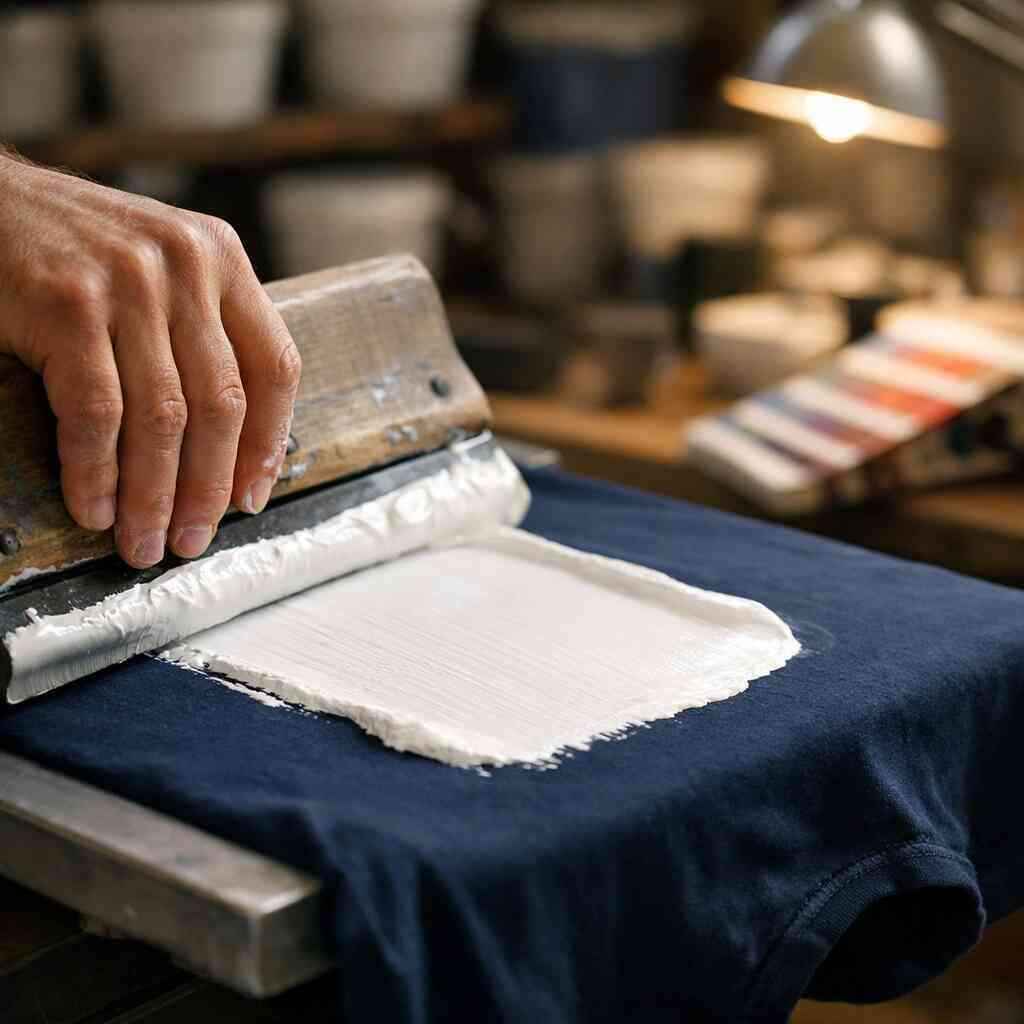
Screen printing has dominated the custom apparel world for decades because it produces vibrant, durable results at scale. The process pushes plastisol or water based ink through fine mesh screens onto the fabric surface. When you run an M&R Gauntlet automatic press pumping out hundreds of shirts per hour, fabric consistency becomes critical. Ring spun cotton provides that perfectly smooth surface that allows ink to sit on top rather than sink in. The fibers lie flat and aligned, creating an ideal canvas for crisp edges and solid color blocks. Our screen printing fabric selection on Long Island process starts with testing each blank for fiber alignment and surface tension.
The mesh count on your screen interacts directly with the fabric weave underneath it. A 110 mesh screen pushes more ink through for bold underbase layers on dark garments. That thick deposit needs a fabric tight enough to hold the ink without it seeping through to the inside. Ring spun cotton provides that density while remaining soft against the skin. Open end cotton, by contrast, has microscopic gaps that let ink bleed and create blurry edges. You also need fabric that withstands multiple passes under the screen without shifting or stretching. Registration errors multiply when the shirt moves even slightly between color stations.
Water based ink has gained serious momentum as brands demand softer hand feel and eco-friendly processes. These inks absorb into cotton fibers rather than sitting on top like plastisol. The result is a print that feels part of the fabric itself, with zero cracking even after years of washing. Ring spun cotton absorbs water based ink evenly and holds the pigment deep within the fiber structure. The ink bonds at a molecular level, creating wash fastness that passes ASTM D5264 testing without fading. Our OEKO-TEX certified water based inks paired with premium cotton deliver prints safe enough for baby onesies and tough enough for construction workwear. That combination simply cannot be matched on cheap blanks.
DTG Compatibility Pre Treatment and Pima Cotton Long Staple Magic
Direct to garment printing changed the game for small runs and photorealistic designs. A Brother GTX Pro printer sprays water based pigment ink directly into the fabric fibers, much like a desktop inkjet. The process requires pretreatment, a liquid solution applied to the shirt that bonds the ink to the cotton. Without proper pretreatment, DTG prints wash out quickly and lack vibrancy on dark garments. Cotton provides the ideal receptor for pretreatment because the fibers swell and open up under the solution. Polyester resists pretreatment absorption, leading to poor ink adhesion and faded results. Our DTG compatible fabrics in Commack NY inventory focuses on high cotton content for maximum print quality.
Pima cotton and other long staple varieties take DTG printing to an entirely different level. Long staple fibers measure over 1.375 inches, which means fewer fiber ends protrude from the yarn surface. Fewer protruding ends translate to less fibrillation, the tiny fuzz that scatters ink particles and softens fine details. A Pima cotton tee lets the Brother GTX Pro lay down dots so precise that photo gradients look continuous. Short staple cotton creates a slightly textured surface that diffuses ink droplets before they hit their target. The difference shows up most clearly in small text and intricate line work under a loupe.
Pretreatment chemistry also behaves more predictably on high grade cotton with consistent fiber length. Cheaper cottons have variable absorption rates that create patchy pretreatment coverage across the garment. You end up with areas where ink sits on the surface and other spots where it sinks too deep. That inconsistency produces color variation visible to the naked eye from across the room. Our team in Commack runs AATCC crocking tests on every DTG order to verify ink adhesion meets commercial wash standards. We also track how different fabric lots respond to pretreatment using spectrophotometer readings against Pantone color references. Direct to garment printing on cotton continues to evolve as ink chemistry and fabric engineering advance together.
Direct to Film and Heat Transfers Polyester Performance and Stretch Challenges
Direct to film printing has exploded in popularity because it works on fabrics that DTG cannot touch. The process prints designs onto a PET film with adhesive powder, then heat presses the entire graphic onto the garment. This method opens up polyester, nylon, and performance blends that cotton centric printing methods struggle with. The catch is that polyester melts at temperatures close to what DTF adhesive requires for proper bonding. Our direct-to-film fabric compatibility Commack testing has taught us exactly which blends handle the heat cycle without damage. Lower temperature curing adhesives have improved things, but fabric selection remains critical.
Stretch fabrics present a unique challenge for any transfer based decoration method. Spandex and elastane blends stretch during wear but the printed film does not stretch at the same rate. This mismatch creates cracking along stretch lines, especially across the chest and shoulder blades. Polyester performance tees for athletic use need prints that move with the athlete through full range of motion. Our DTF team adjusts adhesive formulations and curing profiles based on the exact fabric composition of each order. A 95/5 poly spandex blend behaves very differently from a 90/10 ratio under the heat press.
The surface texture of polyester also affects how DTF adhesive grabs the fabric. Smooth, tightly woven polyester allows the adhesive to melt into a thin, even layer that bonds securely. Textured or brushed polyester creates air pockets that weaken the bond and lead to peeling edges. Heat transfer vinyl faces similar challenges on performance fabrics with silicone based moisture wicking coatings. Those coatings repel water but also repel adhesives, making bonding nearly impossible without aggressive pretreatment. Sublimation printing on polyester fabric offers an alternative that dyes the fibers directly instead of adding a layer on top. Sublimation dyes become part of the polyester at a molecular level, so the print cannot crack or peel.
Embroidery on Different Fabrics The Stabilizer Game
Embroidery turns a simple logo into a textured, dimensional statement that screams quality. The needle pierces the fabric thousands of times per minute, pulling 40wt polyester thread through the material in precise patterns. That mechanical stress requires a stable fabric that resists shifting under the needle plate. Woven fabrics like oxford cloth and twill provide natural stability with their tight grid structure. Knit fabrics like jersey and pique stretch and move, demanding stabilizer backing to hold everything in place. Our embroidery on different fabrics near Long Island service uses cutaway stabilizer on knits and tearaway on wovens.
The stabilizer choice changes completely depending on what you are embroidering and how that garment will be worn. A performance polo with moisture wicking properties needs a no show mesh stabilizer that does not block airflow. Heavyweight fleece for custom hoodies demands a medium weight cutaway stabilizer to prevent the dense stitches from sinking into the plush interior. 3D puff embroidery adds foam under the thread for a raised effect that pops off the fabric surface. That technique requires an extra stable base fabric because the foam adds height and leverage against the stitches.
Flat embroidery on lightweight fabrics like custom v-neck tees must balance coverage with drape. Too much stabilizer makes the embroidered area stiff and uncomfortable against the skin. Too little stabilizer results in puckering that warps the fabric around the design. Our embroidery team tests stitch density, needle size, and stabilizer combinations on sample fabric before running production. Embroidery fabric stabilizer guide resources explain the science but nothing replaces hands on experience. A properly stabilized embroidery job lasts longer than the garment itself and looks better with every wash.
Eco Friendly Inks Meet Sustainable Custom Tees The OEKO TEX Factor
The custom apparel industry has undergone a green revolution that benefits both the planet and print quality. Water based inks certified by OEKO-TEX Standard 100 guarantee that no harmful chemicals touch the wearer’s skin. These inks work beautifully on organic cotton and recycled polyester fabrics that reduce environmental impact. Our sustainable custom tee fabrics Long Island collection includes options made from recycled plastic bottles and organic farming practices. The print results on these eco fabrics rival anything from conventional materials.
Sustainable fabrics bring unique printing challenges that conventional blanks do not share. Recycled polyester fibers have different dye affinity than virgin polyester, affecting how colors appear after curing. Organic cotton uses no chemical treatments that conventional cotton receives to improve ink absorption. Our team at the Commack shop adjusts pretreatment formulas and cure temperatures to match each sustainable fabric’s characteristics. The extra effort pays off when you can hand a customer a shirt that looks incredible and carries genuine environmental credentials.
The shift toward eco friendly custom shirt printing aligns with what modern consumers demand from brands. Corporate clients want their promotional apparel to reflect sustainability commitments without sacrificing quality. Youth sports teams and school spirit wear benefit from knowing the uniforms are safe for developing bodies. Our sustainable fabric options custom tees 2026 lineup proves that green printing does not mean compromising on vibrancy or durability. Water based inks on organic cotton produce prints that feel invisible to the touch and survive more wash cycles than traditional plastisol. That combination of softness, safety, and staying power defines where custom printing is heading.
How to Match Fabric to Your Crew Event or Workday Grind
The perfect fabric for a summer 5K fundraiser tee could not be more different from what a construction crew needs on the job site. Context drives every smart fabric decision, and thinking through how your shirts will be worn saves you from costly mismatches. Outdoor events in July demand moisture wicking and sun protection. Trade work calls for heavy duty fabrics that stand up to abrasion and repeated industrial washing. Your company holiday party shirts might prioritize softness and a vintage look over ruggedness. Matching the fabric to the moment ensures your custom apparel gets worn instead of buried in a drawer.
Summer Heat Calls for Moisture Wicking and Lightweight Custom Summer Tees
Humidity hits different on Long Island when summer settles in and outdoor events kick off. Your team needs shirts that pull sweat away from the body and release it to the air for rapid evaporation. Moisture wicking polyester and performance blends use capillary action to move moisture along the fiber surface to the outside of the garment. Cotton absorbs moisture and holds it, turning your shirt into a heavy, sticky mess by noon. Our moisture-wicking shirt printing custom apparel selection includes A4 performance tees engineered specifically for hot conditions.
Lightweight fabrics in the 3.5 to 4.5 ounce range feel barely there on scorching days but must still hold a print. Mesh panels and micro perforations add ventilation without sacrificing the printable surface area your logo needs. Sublimation works exceptionally well on polyester performance fabrics because the dye infuses directly into the fibers. The print adds zero weight or texture to the garment, preserving full breathability. Dri-fit performance fabric custom shirt printing options let you create athletic wear that performs as good as it looks.
Sun protection factors into summer fabric choices more than most people realize. Tightly woven polyester naturally blocks more UV radiation than loose knit cotton of the same weight. Some performance fabrics carry UPF ratings that add measurable protection for outdoor workers and event staff. The dye color also affects UV blocking, with darker shades absorbing more rays before they reach skin. When you order summer shirts for a Suffolk County beach cleanup or outdoor festival, fabric weight and weave directly impact wearer comfort and safety.
Durable Custom Workwear Fabrics That Survive Job Sites
Construction crews, landscapers, and warehouse teams destroy cheap shirts within a week. Abrasion from tool belts, snagging on equipment, and frequent industrial washing demand fabric built for punishment. Heavyweight cotton duck and canvas weaves provide a level of durability that jersey knit tees cannot approach. Twill woven work shirts resist tearing and hold embroidery beautifully through repeated wash cycles. Our durable custom workwear fabrics near Commack category covers everything from high visibility polyester to flame resistant cotton blends.
The stitching on workwear fabrics matters as much as the material itself. Triple needle stitching on stress points prevents blowouts when workers bend, lift, and stretch throughout the day. Bar tack reinforcements at pocket corners and placket edges add strength precisely where tension concentrates. Reflective striping on custom workwear must bond seamlessly to polyester without peeling under heat and moisture exposure. Our screen printing team uses specialized inks for high visibility garments that maintain retroreflectivity after curing.
Color retention in workwear is a make or break factor for brand image. Faded, washed out logos on job site shirts communicate neglect and corner cutting to your customers. Dye sublimated polyester work shirts maintain color intensity because the dye lives inside the fiber, not on top. Screen printed cotton work shirts need proper cure temperatures and quality ink to survive industrial laundry services. We test workwear prints through fifty wash cycles before approving any fabric and ink combination for commercial orders. Your crew represents your company every time they step onto a job site in Suffolk County or beyond.
The Softest Shirt for Printing Tri Blend Vintage Feel Secrets
There is a reason why vintage band tees from the eighties command ridiculous prices on resale markets. The fabric feels broken in and impossibly soft, like it has been loved for decades before you ever put it on. Modern tri blend fabrics recreate that magic by combining ringspun cotton, polyester, and rayon in precise ratios. The rayon brings drape and a silky hand that pure cotton cannot match alone. Our tri-blend t-shirt printing custom shirts feature the Bella Canvas 3413, widely considered the gold standard.
Tri blends print differently than pure cotton because the rayon content changes how ink sits on the surface. Water based inks produce stunning soft hand prints on tri blends that feel indistinguishable from the fabric itself. The slight heathered appearance of tri blend yarns adds visual depth that solid dyed cotton lacks. This heather effect comes from the different fibers accepting dye at different rates, creating a natural marled look. Discharge printing, which removes the existing dye before depositing pigment, creates incredible vintage effects on tri blend bases.
The downside of tri blends is that they require more careful handling during the printing process. Rayon loses strength when wet, so pretreatment for DTG printing must be applied evenly without oversaturating the fabric. The polyester content also limits cure temperatures, requiring inks formulated for low temperature curing. Despite these challenges, the end result justifies the effort for anyone seeking the softest shirt for printing available today. Your company retreat tees and weekend lifestyle apparel deserve that worn in comfort from day one.
Fabric Weight for Custom Hoodies When Heavyweight Means Staying Power
A hoodie is an investment piece that people wear for years, not a disposable item like a conference tee. The weight of the fleece determines whether that hoodie becomes a closet staple or gets donated after one season. Lightweight hoodies in the 7 to 8 ounce range work for layering but lack the substantial feel customers expect. Our custom hoodies start at 10 ounce fleece and climb to 13 ounce heavyweight options that feel like armor against cold weather. The hoodie fabric weight consideration matters because heavier fleece holds embroidery and screen prints with more authority.
Fleece composition splits into cotton faced, poly faced, and blended options, each with different printing characteristics. Cotton faced fleece absorbs screen printing ink beautifully and develops a soft patina over time. Polyester faced fleece resists staining and pilling but requires lower cure temperatures to prevent scorching. The interior pile density also affects how the hoodie insulates and whether it feels plush against the skin. Cross grain cutting, where fabric panels are cut perpendicular to each other, reduces twisting and maintains shape through years of wear.
Embroidery on heavyweight hoodies creates a dimensional, premium look that screen printing cannot replicate. The dense fleece supports dense stitch counts without the fabric collapsing under the thread weight. 3D puff embroidery on a 13 ounce hoodie creates a bold, raised logo that stands out across a room. Our embroidery team uses 75/11 needles and medium weight cutaway stabilizer specifically for fleece applications. A properly decorated heavyweight hoodie sells for premium prices because the customer feels the quality instantly.
Picking the Right Canvas for Your Logo A Custom Shirt Fabric Guide Wrap Up
You now understand that the best fabric for printing depends entirely on your specific situation. There is no single correct answer that works for every order, every print method, and every budget. The key is matching fabric to purpose with the same care you put into designing your artwork. Our print shop at 1139-7 Jericho Tpk in Commack, NY 11725, helps customers navigate these choices every single day. We stock blanks from Bella Canvas, Next Level, Comfort Colors, Gildan, and A4 to cover every possible need.
When you need the best t-shirt fabric for printing, start by asking how the shirt will be worn and washed. A charity walk tee needs lightweight breathability with a design that survives dozens of washes. A corporate polo demands a pique knit that holds embroidery without puckering around the chest logo. A family reunion shirt might prioritize softness and a vintage look over technical performance specs. Our guide to choosing fabrics for custom shirt printing 2026 walks you through every consideration in detail.
The right fabric choice also affects your bottom line in ways the per shirt price does not reveal. Premium blanks reduce returns, complaints, and reprint costs that erode profitability on budget tees. Your brand reputation grows stronger when recipients reach for your custom apparel again and again. We have served businesses across Suffolk County with no minimum orders and fast turnaround times that respect your deadlines. Visit our Commack location or use our free online designer to start your project today. The perfect fabric is waiting, and we know exactly how to print on it.
Frequently Asked Questions
What fabric works best for DTG printing on dark shirts?
One hundred percent ring spun cotton produces the cleanest DTG results on dark garments. The fibers absorb pretreatment evenly, creating a stable base for white underbase ink. Pima or long staple cotton reduces fibrillation that scatters fine details. Avoid polyester blends above thirty percent because pretreatment beads up on synthetic fibers. Our Brother GTX Pro printers achieve ASTM D5264 wash fastness on properly pretreated cotton.
Can you screen print on polyester performance fabric?
Yes, but you need low cure plastisol inks specifically formulated to prevent dye migration. Polyester dyes sublimate at temperatures above 320 degrees Fahrenheit, bleeding into the ink layer. We use poly blocking additives and precise temperature control on our M&R Gauntlet press. The result is a clean, opaque print that stays bright. Stretch additives in the ink also prevent cracking on performance fabrics with spandex content.
What is the softest t-shirt material for custom printing?
Tri blend fabric combining ring spun cotton, polyester, and rayon delivers unmatched softness. The rayon adds drape and a silky hand texture that pure cotton cannot achieve. Bella Canvas tri blend tees are the industry standard for premium softness. Water based inks on tri blends create prints with zero hand feel. These shirts feel broken in from the first wear.
How do I choose between screen printing and embroidery for my logo?
Fabric type and logo complexity drive this decision. Embroidery excels on thicker fabrics like fleece, pique polos, and woven work shirts. Screen printing works better on lightweight knits and large, detailed designs. Embroidery adds perceived value and lasts forever on structured garments. Screen printing is more cost effective for large orders with complex color gradients. Many customers combine both methods across different garments in the same order.
Does fabric weight really matter for custom hoodies?
Absolutely. Lightweight hoodies under 8 ounces feel flimsy and do not hold embroidery well. Heavyweight 10 to 13 ounce fleece provides structure for dense stitch counts and bold screen prints. The heavier fabric also resists pilling and maintains shape through repeated washing. Customers perceive heavyweight hoodies as premium products worth higher prices. The fabric weight directly impacts how long your printed design stays looking fresh.
Are sustainable fabrics harder to print on?
Organic cotton and recycled polyester require slight adjustments but produce excellent results. Organic cotton absorbs pretreatment differently than conventional cotton, so we adjust application settings. Recycled polyester has slightly different dye affinity that affects heat press timing. Our water based, OEKO-TEX certified inks bond beautifully with sustainable fabrics. The finished product meets the same quality standards as conventional materials.
What file format do I need for custom shirt printing?
Vector files like AI, EPS, or PDF work best for screen printing and embroidery digitizing. These formats scale without losing quality and allow easy color separation. Raster files like PNG or JPG at 300 DPI work for DTG and DTF printing. Our free online designer accepts all common formats. We also offer artwork clean up and vector conversion services if your file needs adjustments.
Frequently Asked Questions
Question: What fabric works best for screen printing custom t-shirts with vibrant colors and durability?
Answer: Ring-spun cotton is the top choice for screen printing fabric selection because it provides a smooth, flat surface that keeps ink on top of the fibers instead of soaking in. At Custom Shirt Printings in Commack, we use blanks like Next Level and Bella Canvas combed ring-spun cotton that minimize fibrillation, so your design stays crisp edge to edge. For dark garments, a heavyweight 6 oz ring-spun cotton holds a solid underbase without bleed-through, and plastisol inks cure into a flexible, crack-resistant film. This combination consistently passes industrial wash testing, which is why we recommend it for Suffolk County businesses, school spirit wear, and promotional apparel that needs to look great for years. Our automatic M&R screen press maintains perfect registration on these fabrics, and you can order with no minimums or rush turnaround right from our online designer.
Question: For DTG printing on dark garments, is 100% cotton always the best choice?
Answer: High-percentage cotton, especially long staple varieties like Pima, gives the cleanest DTG results because the fibers accept pretreatment evenly and create a stable base for white underbase ink. Our Brother GTX Pro printers in Commack achieve photo-realistic detail on 100% ring-spun cotton DTG compatible fabrics, with colors that remain bright through repeated home and commercial laundering. While we can print on cotton-poly blends up to 30% polyester, pure cotton eliminates the risk of dye migration that can tint the underbase. We test every fabric batch with spectrophotometer readings and crocking checks so your custom tees, family reunion shirts, or company apparel maintain true Pantone-matched shades. For Long Island customers who demand soft hand and eco-friendly results, our water-based OEKO-TEX inks on organic cotton give you a print that feels part of the fabric and holds up for years.
Question: The article “What Is the Best Fabric for Custom Shirt Printing in 2026” highlights tri-blend options. How do tri-blend fabrics compare to cotton for a vintage feel, and can you screen print on them?
Answer: Tri-blend t-shirt printing using cotton, polyester, and rayon creates a uniquely soft hand and natural heathered look because the three fibers absorb dye at different rates. At Custom Shirt Printings, we stock the Bella Canvas 3413 tri-blend, which is prized for its drape and broken-in feel from the first wear-perfect for vintage feel custom tees and lifestyle merchandise. Screen printing on tri-blends works beautifully with water-based or low-cure plastisol inks that stretch with the fabric and avoid scorching the polyester content. Because rayon loses strength when wet, we carefully control pretreatment and curing temperatures in our Commack shop, so your design stays crisp without puckering. Whether you need band-inspired crew shirts, event merchandise, or softest shirt for printing orders, our team will match the right ink system to the tri-blend for a fully wearable, long-lasting result you can order with no minimums.
Question: What performance fabric options do you recommend for moisture-wicking custom athletic shirts, and how does printing work on them?
Answer: For moisture-wicking shirt printing we recommend 100% polyester or poly-spandex blends like the A4 performance line, which use capillary action to pull sweat away from the skin. Direct-to-film (DTF) and sublimation are the most reliable print methods for performance fabric custom apparel, because they bond at the fiber level without adding a heavy ink layer that blocks ventilation. Sublimation infuses dye into the polyester, so the design never cracks or peels, and DTF transfers use a thin adhesive film that stretches with the garment through full range of motion. At our Commack facility, we dial in lower cure temperatures and specialized adhesives to prevent dye migration on bright colors and keep reflective striping intact for workwear. From lightweight custom summer tees for 5K runs to durable custom workwear fabrics for job-site crews, we offer free artwork help, vector conversion, and fast turnaround-just upload your logo to our online designer or visit us at 1139-7 Jericho Tpk., Commack, NY 11725.
Question: What fabric weight should I choose for custom hoodies to ensure my logo looks great and lasts?
Answer: For custom hoodies, we recommend starting at a minimum 10 oz heavyweight fleece and moving up to 13 oz if you want a truly premium feel and maximum print durability. Fabric weight for custom hoodies determines how well the garment supports screen printing, embroidery, or DTF transfers-heavier fleece reduces puckering and holds dense 3D puff embroidery without collapsing. At Custom Shirt Printings, we stock cotton-faced and poly-faced blends that accept low-cure inks perfectly, and we pair them with the correct cutaway stabilizers for flat or dimensional embroidery. Whether you need crew-neck sweatshirts for school spirit wear, full-zip hoodies for corporate gifts, or pullover styles for family reunion apparel, our team in Suffolk County helps you select the right blank weight and decoration method. Every order comes with free virtual mockups and can be turned around quickly with no minimum quantity, so you get custom hoodies that feel as substantial as they look.