
What Is Definition of Thread Count at Custom Shirt Printings
Unraveling the Threads: The Artful Welcome to Fabric Literacy
Why Thread Density Matters for Custom Shirt Printing in Commack
Thread count sits at the heart of comfortable apparel. Professionals define it as the number of warp and weft threads per inch on cotton shirts. A higher number often signals softer hand feel and tighter structure. For custom prints, density influences how ink bonds and how garments survive repeated washes. That’s why discerning clients visit our custom shirt printing headquarters for guidance.
Yet, high density alone never guarantees perfect results. Screen printing, for instance, loves a sweet spot within that fabric weave density explained by technicians. Within that range, vibrant inks cure evenly without cracking or bleeding. Visit our screen printing services overview to explore fabric examples matched by weave density. Informed choices save time, reduce waste, and protect your marketing budget.
From Cotton Fields to Long Island Closets The Journey of a Tee
Every premium tee begins in sun-drenched cotton fields, but its destiny changes at the loom. There, spinners select ring-spun or open-end yarn, altering future thread count. Ring-spun strands twist tighter, delivering higher density and buttery softness-classic ring-spun cotton thread count benefits prized by lifestyle brands. Our online fabric catalog for custom tees highlights these construction differences with tactile samples. Consult it before approving any bulk order.
After weaving, greige cloth travels to dye houses, finishing plants, and finally our Commack floor. Each stop affects thread stability, shrinkage, and print readiness. We rigorously test bolts, washing and stretching them, before shelving options for local creators. This disciplined path means your custom apparel arrives consistent, comfortable, and ready for art. Such transparency defines what does thread count mean in custom apparel to us.
Setting Expectations for Premium Custom Tees Near You
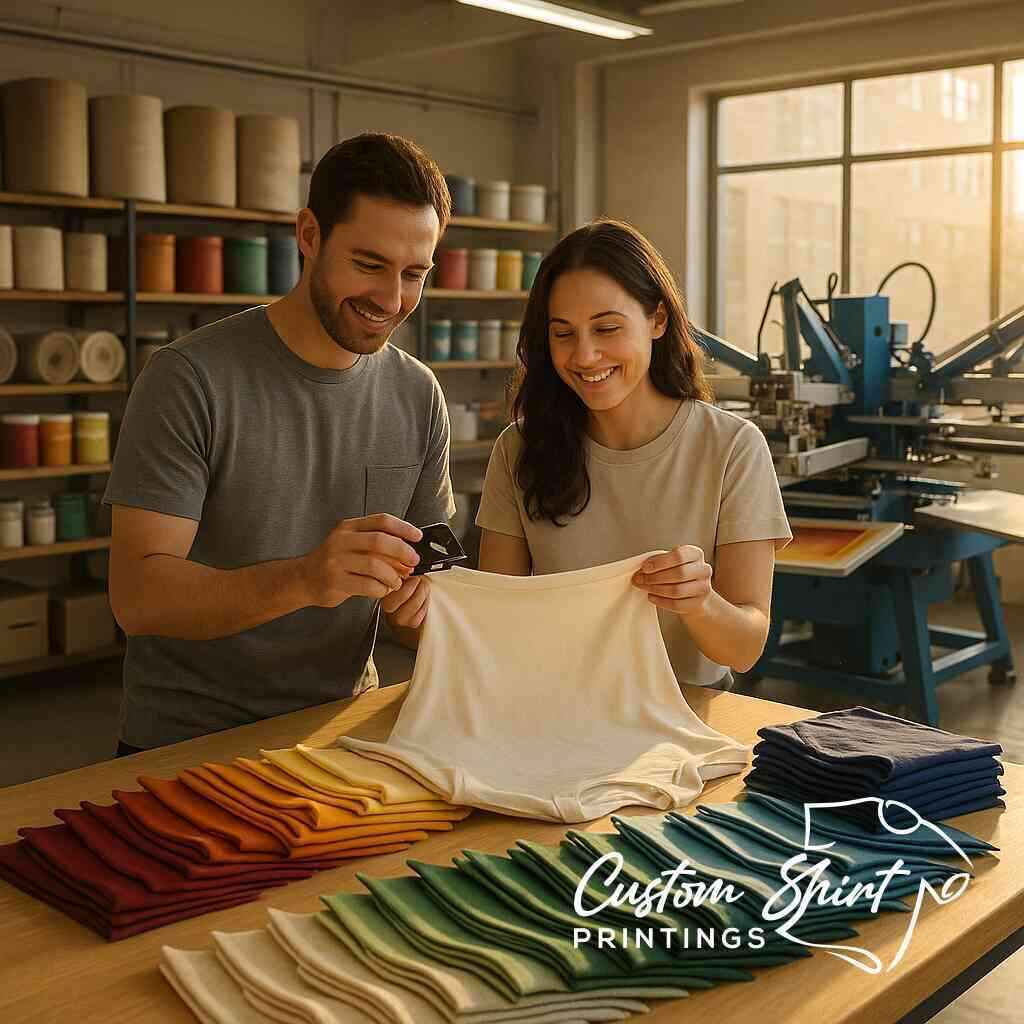
Ordering printed apparel online can feel risky when you cannot touch the fabric. That’s why we maintain a curated wall of tactile swatches and finished pieces. You can shop sample garments or simply feel them in person before approving art. This sensory step clarifies the softness of high thread count tees versus rugged low count work shirts. Clear expectations prevent surprises and accelerate turnaround.
Remember, premium custom tees Long Island residents love must balance comfort, budget, and branding goals. A corporate giveaway might favor mid-range density for cost efficiency. Meanwhile, fashion drops thrive on elevated counts that drape elegantly and photograph well. Our Commack experts decode these options, translating spec sheets into plain language. Together we select breathable high density cotton that celebrates your logo in every wear.
Counting Threads: Decoding the Numbers Behind Softness and Strength
What Threads Per Inch Really Means on Cotton Shirts
Thread count definition for T-shirts begins with a simple metric: threads per inch on cotton shirts. This number tallies the warp and weft yarns crossing within a single linear inch. A tighter grid delivers the coveted softness of high thread count tees and resists print distortion. Conversely, loose grids breathe well but can pill sooner under stress. Our specialists trace each fabric back to mills highlighted in our material sourcing story, ensuring the numbers on every spec sheet match real-world feel.
Understanding what does thread count mean in custom apparel empowers shoppers to make confident choices. Many shoppers assume “higher is always better,” yet printing techniques reward balance, not extremes. Dense weaves hold intricate edges while allowing bright inks to anchor without bleeding. However, overly compact percale weaves can repel specialty pigments that require deeper penetration. Skilled Long Island custom shirt printing experts test swatches in-house before approving your artwork.
Thread Count Versus Fabric GSM Demystifying Spec Sheets
Manufacturers often pair thread count with GSM, the grams per square meter that indicate fabric mass. While thread numbers reveal weave density, GSM highlights overall weight and drape. Lightweight knits can pack surprising density, ideal for breathable high density cotton more suited to athletic projects. Heavy fleece may carry modest counts yet still excel for durable low thread count work shirts. Pairing both metrics prevents surprises when boxes arrive for your premium custom tees Long Island events.
Balanced evaluation also explains how thread count affects print quality across methods. Direct-to-garment demands a smooth face, whereas screen setups tolerate minor texture. Designers comparing specs should weigh GSM alongside weave density explained by sourcing teams. To see this contrast, explore the shirt listings under our direct to garment print options page; each entry lists both figures for clarity. Knowing both numbers lets you match ink chemistry to fiber architecture.
Ring Spun and Combed Cotton Advantages for Logo Shirt Design
Ring-spun yarn, twisted tight, delivers a finer diameter and heightened strength. This structure raises effective density even when the published thread count remains moderate. Combed processing then removes short fibers, eliminating rough ends that cause fuzz under ink. The result is a printing surface that captures micro-details, perfect for intricate logo shirt design needs. Clients seeking ultra-soft hand feel often choose ring-spun cotton thread count benefits for giftable merch.
Not every project needs that premium finish. Budget campaigns sometimes prefer open-end yarns with lower counts, trading satin smoothness for price relief. These fabrics still perform when the art uses bold, blocky graphics. Long Island custom shirt printing shop crews adjust mesh and squeegee pressure to compensate for coarser grain. By calibrating variables, we safeguard clarity while honoring cost ceilings.
Threads Per Centimeter Conversion for International Sourcing
Global supply chains list density in both imperial and metric formats. Converting threads per inch to threads per centimeter ensures apples-to-apples comparisons while vetting overseas quotes. Multiply the inch figure by 0.3937 to receive the metric value; then confirm the supplier’s range matches domestic samples. This practice protects brand consistency across regions without delaying production. Discerning buyers track these conversions inside shared spec sheets.
Clarity in translation also supports compliance with foreign mills adopting eco standards. Many top factories tout sustainable counts on organic yarns, and understanding conversions verifies those promises. Our coordinators routinely bridge time zones, ensuring breathable weaves appear identical in every warehouse. Reference maps of Long Island geography context highlight shipping nodes that speed deliveries to Commack. Accurate math keeps your t-shirt material selection guide aligned, whether cotton ships from the Carolinas or coastal India.

Print Ready Fabrics: Matching Weave Density with Ink and Embroidery
Choosing Fabric for Screen Printing Bold Colors on Dense Weaves
Screen printing delivers knockout color when the fabric face sits smooth, tight, and mildly absorbent. Therefore, choosing fabric for screen printing starts with a balanced count between 150 and 190 threads per inch. This range supplies enough surface density to hold viscous plastisol without flooding the weave. Yet, it still allows ink to sink slightly, locking pigments under cotton fibers for durability. Study its performance beside looser knits in our screen vs DTF color fidelity breakdown.
Dense percale weaves above 200 threads per inch feel luxurious but sometimes resist plastisol migration. Our technicians pre-flash test such fabrics, adjusting mesh tension to prevent haloing around fine outlines. When results impress, the softness of high thread count tees combines with billboard color for unforgettable merch drops. However, most local restaurant crews prefer mid-density knits that dry fast during hot shifts. Explore our approach to boosting print quality in Commack before you approve production.
Optimal Thread Count for DTG and DTF Vibrant Ink Uptake
Direct-to-garment relies on microscopic droplets that crave an ultra-smooth canvas. Ring-spun combed cotton at 28 to 32 singles usually translates to roughly 165 threads per inch. That specification absorbs water-based ink quickly, preventing puddles and banding lines. Find it beside heavier fleece on our all custom print services list, helping you compare results. Because DTF adds adhesive powder, we recommend slightly tighter weaves so melting resin bonds without seeping through.
Testing shows 180 to 200 thread counts give DTF transfers a crisp edge even on athletic polyester blends. At higher counts, glue stays atop the knit, ensuring vivid gradients that rival offset posters. Conversely, looser jersey can sprinkle excess powder inside the dryer, shortening belt life and raising maintenance costs. By watching stitch angle, we also reduce coating friction, keeping custom apparel quality factors under control. Such diligence confirms why Long Island custom shirt printing shop pros trust controlled density over guesswork.
Best Thread Count for Embroidery Detail and Tackle Twill
Embroidery needles puncture fabric thousands of times, so the base cloth must resist tearing while accepting thread tension. A thread count around 140 offers balanced hole memory, preventing puckering behind satin stitches. Yet, logo jackets requiring tackle twill patches benefit from counts nearer 120, allowing the adhesive film to grip. Our team evaluates these zones in-house before greenlighting professional embroidery stitching for your campaign. Consequently, decorative fills remain smooth, and outlines register flawlessly across repeated wash cycles.
Remember, embroidery adds its own weight, effectively increasing apparent GSM even if the shirt starts light. Therefore, pima cotton polos at 160 GSM and 130 thread count still drape elegantly after stitching. We also test bobbin thread tension, ensuring no show-through on white athletic tees. Clients appreciate how our t-shirt material selection guide translates these lab notes into clear prose. That transparency supports custom apparel trust and keeps redo rates almost nonexistent.
Durable Low Thread Count Work Shirts for Heavy Duty Branding
Industrial work shirts favor rugged open-end yarns with counts between 90 and 110 threads per inch. This loose basket weave breathes under warehouse lights while shrugging off snags from pallet corners. Because ink cannot sink deeply, we use heavier flood strokes, producing bold block lettering that remains readable after grime hits. Our logo design tips in Commack show how high-contrast art elevates that weave for maximum roadside visibility. The result is durable low thread count work shirts that outlast multiple contracting seasons.
We fortify arm seams with bar-tacks and reinforce collars, ensuring the garment survives industrial laundries. Even so, fabric weave density explained during intake helps clients balance cost, toughness, and worker comfort. Many fleets also order matching custom hoodies that share similar open knit backs for easy layering. When seasons shift, the crew simply swaps tees for sweatshirts without rethinking artwork sizing. That continuity strengthens brand recognition and simplifies inventory tracking for managers.
Sourcing Quality on Long Island: The Custom Shirt Printings Material Playbook
Premium Custom Tees Long Island Partners and Mills
Long Island custom shirt printing shop buyers deserve fabrics that feel luxurious and perform during every wash. Our sourcing team cooperates with trusted regional mills and Southern ring-spun specialists who spin breathable high density cotton into consistently tight weaves. These suppliers provide transparent lab reports, confirming thread count accuracy before a single blank reaches Commack. Because we see garments at loom level, we reject any bolt that fails burst or pilling tests, protecting your premium custom tees Long Island customers treasure. That hands-on approach builds mutual confidence and eliminates unpleasant post-print surprises.
We also maintain brand relationships with Bella+Canvas soft jersey, Comfort Colors pigment-dyed classics, and Gildan’s dependable corespun blends. Each partner documents ring-spun cotton thread count benefits in straightforward spec sheets our consultants translate into marketer language. When clients demand blistering retail softness, we lean on 32-singles ringspun, roughly 180 threads per inch, ensuring graphics float atop satin-smooth knit surfaces. Construction crews, however, often choose rugged 18-singles jerseys that withstand abrasive environments while holding bold block logos. Balancing weave density with workplace realities is the hallmark of custom shirt printing in Commack experts.
Eco Friendly Organic Cotton Thread Count Selection
Sustainability now shapes purchasing decisions as strongly as comfort. To meet that expectation, Custom Shirt Printings evaluates Global Organic Textile Standard certificates alongside thread count when adopting new lines. Organic growers favor longer staple cotton, allowing mills to spin finer yarn without chemical softeners, so you receive silky hand feel with lower environmental impact. We target densities between 160 and 190 threads per inch since that zone marries water-based ink compatibility with breathable daily wear. Read deeper insights inside our eco friendly tees on Long Island guide.
Beyond fiber origin, finishing chemistry matters. We select peroxide-bleached blanks instead of chlorine systems, preventing residual halogens that can yellow prints later. Enzyme-washed knits further smooth micro-fibrils, making them ideal for direct-to-garment gradients without raising GSM. Clients promoting coastal clean-up events love that combination of sustainable pedigree and vibrant design capability. Our buyers continually monitor new regenerative agriculture projects, ensuring future catalogs expand without compromising touch or durability.
Spec Sheet Essentials for Custom Hoodies Sweatshirts and Polos
Heavier garments require a broader data set than simple tees. Every spec sheet we supply lists GSM, threads per inch, yarn twist, and shrinkage percentage, giving designers the full picture before approving mockups. A mid-weight fleece may show only 100 threads per inch, yet its lofty loopback traps air, providing warmth and a plush embroidery foundation. Conversely, French terry hoodies can reach 140 threads per inch, giving screen printers tighter registration when stacking vintage collegiate graphics. Understanding fabric GSM vs thread count allows marketers to predict drape, print opacity, and shipping weight accurately.
Corporate polos introduce another variable: pique versus jersey. Pique knits feature cellular grids that naturally sit around 120 threads per inch, creating a refined texture that spotlights subtle logo shirt design. Jersey polos rise closer to 150, favoring athletic movements and moisture control. We identify ideal densities for sublimation patches, laser cut tackle twill, or classic satin stitch, mitigating distortion around button plackets. Those spec clarifications save procurement officers from costly reorders while showcasing our custom apparel quality factors.
T Shirt Material Guide for Local Teams Businesses and Events
Community leagues often juggle tight deadlines and tighter budgets, so fabric decisions must stay practical. Our t-shirt material selection guide simplifies the process by grouping blanks into Good, Better, and Premium grids, each tagged with suggested printing methods. Coaches selecting colorful mascots appreciate jerseys around 150 threads per inch because choosing fabric for screen printing at that density boosts opacity without raising cost. Booster clubs favor the same weave when ordering hundreds of comfortable custom tees near me for fundraising tables.
Business expos or charity galas sometimes demand embroidered chest emblems and shoulder sponsors. For those cases, we recommend 140-thread combed cotton that accepts the best thread count for embroidery detail while maintaining sleek drape under blazers. Entrepreneurs extending their reach with Lead Marketing Strategies often pair these garments with digital business cards, ensuring cohesive branding from handshake to social share. Events conclude, but trusted construction yields repeat impressions long afterward, reinforcing why Custom Shirt Printings remains the dependable material mentor for organizations across Long Island.
Care Wisdom and Forward Threads: Ensuring Longevity and Comfort
Care Tips for High Thread Count Apparel
High thread count tees feel luxurious, yet they demand mindful laundering. Turn garments inside out before washing to protect printed graphics and delicate fibers. Choose cold water cycles and mild, phosphate-free detergents that rinse clean without weakening cotton strands. Skip harsh bleach because chlorine can abrade the smooth surface that makes premium custom tees Long Island residents love. When every wash honors the fabric weave density explained earlier, softness lasts far beyond the first season.
Drying techniques also shape longevity. Tumble on low heat or, better yet, air-dry shirts flat to minimize torque on seams. High temperatures can over-cure plastisol prints, causing premature cracking despite excellent ink chemistry. While the temptation to iron is strong, always press on the reverse side using a light setting. A clean pressing cloth shields direct heat from your logo shirt design, preserving sharp color. Simple care habits maximize the comfort promised by breathable high density cotton.
Breathability and Wear Over Time Understanding Fabric Weave
Fabric weave directly affects how a shirt feels after countless wears. Tighter percale constructions lock fibers close, yielding admirable durability with modest airflow. Conversely, looser jerseys champion ventilation but may pill sooner if mistreated. For daily commutes across Long Island, balanced 150-count knits offer reliable breathability without sacrificing print clarity. They wick moisture, release body heat, and hold shape even after rapid drying cycles.
Over months of rotation, friction can roughen lesser yarns, yet ring-spun cotton thread count benefits shine here. Its longer staples resist fuzz, so prints remain crisp and tactile comfort stays intact. Durable low thread count work shirts also age gracefully because open-end yarns hide scuffs behind textured grids. Understanding fabric gsm vs thread count lets buyers predict this evolution, selecting blends that complement an active lifestyle and varied weather.
Elevating Your Brand with the Right Fabric Choice Near You
Selecting the proper cloth does more than please wearers; it broadcasts brand values with every handshake. Fashion startups might choose ultra-soft 32-singles for luxurious unboxing moments, whereas construction crews demand rugged twill for safety visibility. Our Commack consultants map these choices against your artwork, considering color saturation, drape, and anticipated laundering environments. The result is custom shirt printing near you that mirrors company culture from ribbon cutting to grand opening.
Print method also informs selection, especially when debating needlework versus ink. Our detailed embroidery versus DTG comparison assesses edge clarity, texture, and cost at different weave densities. With that knowledge, you can decide if thin singles support micro-stitch monograms or if mid-weight ringspun better suits water-based gradients. Whatever the decision, Custom Shirt Printings aligns fabric, technique, and message so every piece feels intentional.
Finally, proximity matters when timelines tighten. Because our Long Island custom shirt printing shop stocks curated blanks locally, you skip freight delays and gain tactile certainty. Visit our showroom, feel options from Gildan, Bella+Canvas, or Comfort Colors, and walk out confident. Supported by Lead Marketing Strategies, we even bundle digital business cards that echo your apparel palette. Thoughtful fabric choices today secure elevated brand perception tomorrow.
Frequently Asked Questions
Question: What exactly is the thread count definition for T-shirts, and how does Custom Shirt Printings measure it?
Answer: In custom apparel, thread count is the number of warp (vertical) and weft (horizontal) yarns woven into one linear inch of fabric. At Custom Shirt Printings we verify threads per inch on cotton shirts with a digital pick counter right on our Commack production floor. This ensures every blank we stock-whether 18-singles workwear or ultra-soft 32-singles fashion tees-matches the published spec sheet. By confirming fabric weave density explained in our sourcing playbook, we guarantee consistent softness, print readiness, and long-term durability for every custom shirt printing project.
Question: How does thread count affect print quality and the overall feel of premium custom tees Long Island clients love?
Answer: A higher, balanced thread count (about 150-190) creates a smoother surface that lets plastisol, DTG, or DTF inks sit evenly, producing sharper lines and richer colors. That density also translates to the coveted softness of high thread count tees because the tighter weave prevents pilling and fuzz. Conversely, rugged low thread count work shirts (around 90-110) breathe well and stand up to abrasive environments, but need heavier flood strokes during screen printing. Our Commack experts test every weave so your art looks vibrant and the garment feels exactly as promised.
Question: In your blog post What Is Definition of Thread Count at Custom Shirt Printings, you mention balancing GSM with weave density-how do I use that information to pick the right blank for my project?
Answer: GSM (grams per square meter) tells you fabric weight, while thread count shows surface smoothness. A 160 GSM tee with 180 threads per inch offers breathable high density cotton-perfect for water-based DTG gradients. A heavier 280 GSM hoodie may list only 110 threads per inch, yet its loft traps heat and welcomes bold screen prints. Our t-shirt material selection guide combines both numbers so you can match print method, climate, and budget. Just share your artwork and target audience; we’ll recommend the ideal blend from our Long Island custom shirt printing shop inventory.
Question: What thread count range is best for embroidery detail or screen printing intricate logo shirt designs?
Answer: For embroidery, a moderate 130-150 thread count offers enough resistance to needle tension while preventing puckering, making it the best thread count for embroidery detail on polos and jackets. For screen printing fine lines, 150-190 threads per inch provide a flat, tight canvas that keeps edges crisp and colors opaque. We calibrate mesh, squeegee pressure, and under-base ink to each weave, so your logo pops whether you choose custom tees, custom hoodies, or percale weave custom button-downs.
Question: Are durable low thread count work shirts still worth it, and how can I keep high thread count apparel looking new?
Answer: Absolutely. Open-end yarn shirts in the 90-110 thread count range deliver airflow, rugged texture, and great value for field crews. We reinforce seams and use high-contrast art so branding stays visible after heavy laundering. For premium high thread count garments, turn them inside out, wash cold with mild detergent, and tumble low or air-dry. These care tips for high thread count apparel preserve both ink and fabric, extending the life of every piece you order from our custom shirt printing near you in Commack.